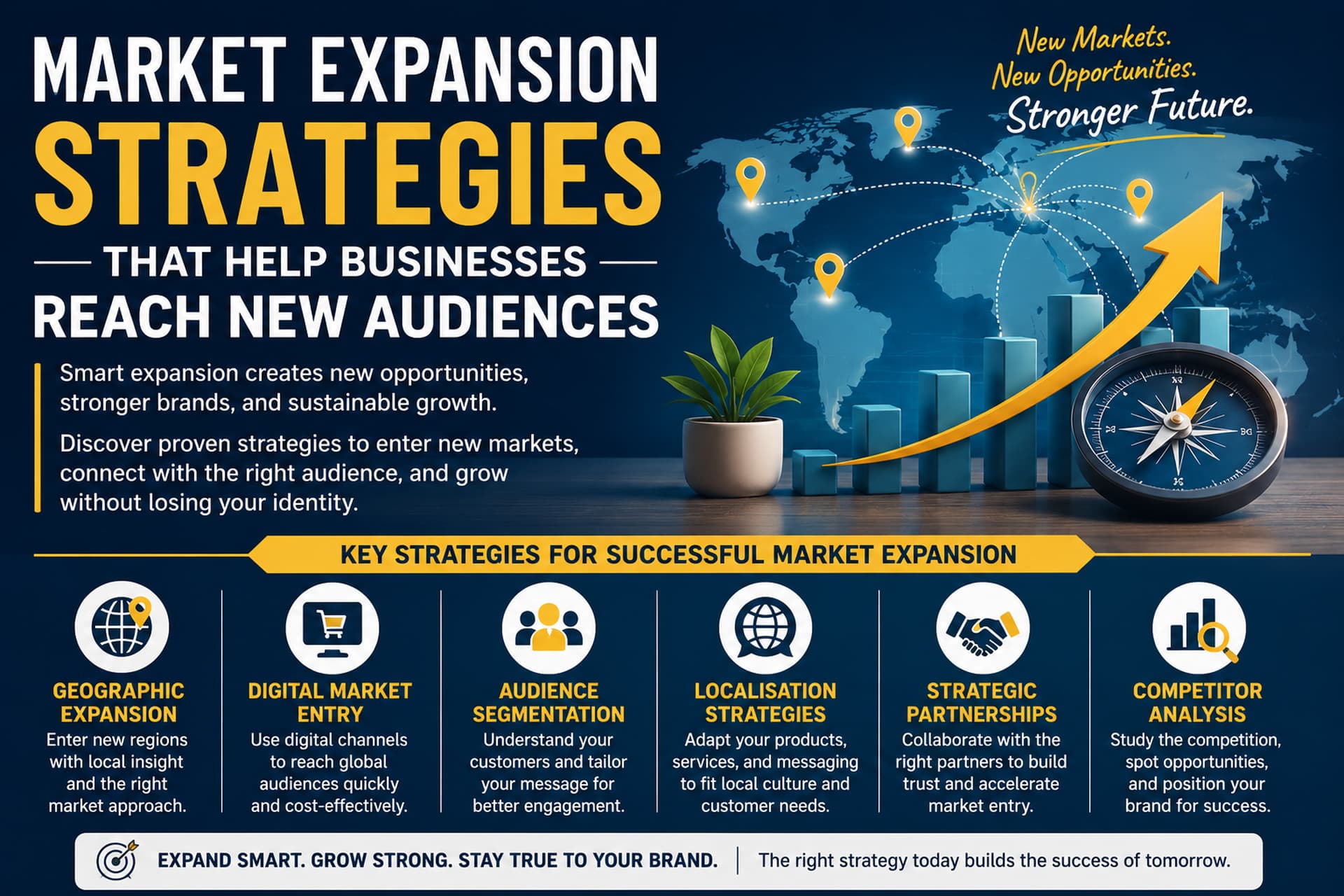
Expanding into new markets is one of the most effective ways for businesses to increase revenue, strengthen brand visibility, and create long-term growth opportunities. Yet market expansion is rarely as simple as launching products in a new location or targeting a different customer group. Businesses that scale successfully usually follow a clear strategy built around research, positioning, adaptability, and customer understanding.
The most sustainable expansion strategies focus on gradual growth instead of rapid overextension. Companies that enter new markets thoughtfully are often better prepared to manage operational challenges, maintain customer trust, and compete effectively against established players. Whether the goal is geographic growth, digital expansion, or reaching entirely new customer demographics, the right approach can help businesses grow without losing focus or damaging their core identity.
This guide explores evergreen market expansion strategies that continue to work across industries, business sizes, and economic conditions.
Why Market Expansion Matters for Long-Term Business Growth
Many businesses eventually reach a point where their existing audience can no longer support the level of growth they want. Expanding into new markets creates opportunities to:
- Increase brand awareness
- Diversify revenue streams
- Reduce dependence on one customer base
- Improve competitive positioning
- Build long-term business resilience
- Reach underserved audiences
- Create new partnership opportunities
Market expansion also helps businesses adapt to changing consumer behaviour. Customer preferences evolve constantly, and businesses that remain too limited in reach often struggle to maintain momentum over time.
Start With Strong Market Research
One of the biggest mistakes companies make is entering new markets without fully understanding them. Effective market research reduces risk and helps businesses make smarter decisions before investing significant time or resources.
Businesses should evaluate:
- Customer demographics
- Purchasing habits
- Local competition
- Pricing expectations
- Cultural preferences
- Economic conditions
- Industry trends
- Regulatory requirements
Good research helps identify whether there is genuine demand for a product or service. It also reveals potential barriers that could slow growth later.
Businesses that invest in customer insights early often avoid expensive mistakes during expansion.
Geographic Expansion Requires Local Understanding
Expanding into a new city, region, or country can unlock major growth opportunities, but every location has unique customer expectations.
What works in one market may not automatically work in another. Consumer behaviour is shaped by local culture, climate, purchasing power, and even communication style.
Successful geographic expansion often includes:
Localised Marketing Campaigns
Businesses should adapt messaging, promotions, and branding to reflect local preferences. This does not mean changing the company’s identity completely. Instead, it means making the brand feel relevant to the audience being targeted.
Regional Pricing Strategies
Pricing structures may need adjustment depending on local competition and economic conditions. Businesses should avoid assuming customers in every region have identical spending habits.
Local Partnerships
Working with regional distributors, influencers, suppliers, or service providers can help businesses build trust faster in unfamiliar markets.
Gradual Rollouts
Instead of expanding everywhere at once, many companies test one region first. This controlled approach provides valuable data while limiting financial risk.
Digital Expansion Creates Global Opportunities
Digital channels have made market expansion more accessible than ever. Businesses no longer need physical locations to reach new audiences.
A strong digital expansion strategy may include:
- International eCommerce
- SEO-driven content marketing
- Social media campaigns
- Online advertising
- Digital partnerships
- Marketplace platforms
- Email marketing automation
Digital expansion allows businesses to test demand in new markets before committing to larger operational investments.
For example, a company can use targeted advertising campaigns to measure customer interest in specific regions before opening offices or hiring local teams.
Audience Segmentation Improves Market Reach
Not every customer responds to the same message. Businesses that understand audience segmentation are often more successful at expanding sustainably.
Audience segmentation involves dividing customers into groups based on factors such as:
- Age
- Income
- Lifestyle
- Industry
- Location
- Buying behaviour
- Interests
- Business size
This allows businesses to tailor products, messaging, and marketing campaigns more effectively.
For example, a software company may market the same platform differently to small businesses and enterprise organisations, even though the core product remains the same.
Clear segmentation improves customer engagement because people feel the business understands their specific needs.
Product Adaptation Without Losing Brand Identity
One of the biggest challenges during expansion is balancing adaptation with consistency.
Businesses often need to adjust products or services for different audiences. However, changing too much can weaken brand identity and confuse customers.
The goal should be strategic adaptation rather than complete reinvention.
Examples include:
- Adjusting packaging for regional preferences
- Offering new pricing tiers
- Adding language support
- Customising product features
- Modifying service delivery models
- Creating market-specific promotions
Strong brands maintain their core values while adapting presentation and customer experience where necessary.
Competitor Analysis Helps Businesses Position Effectively
Entering a new market without studying competitors creates unnecessary risk.
Competitor analysis helps businesses understand:
- Pricing trends
- Customer expectations
- Service gaps
- Brand positioning
- Marketing strategies
- Product weaknesses
- Customer complaints
This information helps businesses identify opportunities to differentiate themselves.
In many cases, expansion success comes from solving problems competitors ignore. Businesses that clearly communicate their unique value are more likely to stand out in crowded markets.
Strategic Partnerships Accelerate Expansion
Partnerships can significantly reduce the time and cost required to enter new markets.
Businesses often collaborate with:
- Local distributors
- Complementary brands
- Industry influencers
- Technology providers
- Franchise operators
- Marketing agencies
- Logistics companies
Strategic partnerships provide access to established customer networks and market knowledge.
For smaller businesses especially, partnerships can create credibility faster than independent expansion efforts.
Build Scalable Systems Before Expanding
Many businesses struggle during expansion because their operations are not prepared for growth.
Before entering new markets, companies should evaluate whether their systems can handle increased demand.
This includes:
- Customer support
- Inventory management
- Shipping logistics
- Staff training
- Marketing processes
- Financial management
- Data tracking
- Technology infrastructure
Operational problems can quickly damage customer trust in new markets. Strong systems create smoother expansion and help businesses maintain service quality as they grow.
Use Data to Guide Expansion Decisions
Modern businesses have access to more performance data than ever before. Companies that track customer behaviour carefully are better positioned to make informed expansion decisions.
Useful metrics include:
- Customer acquisition costs
- Conversion rates
- Retention rates
- Regional sales trends
- Website traffic sources
- Customer lifetime value
- Product demand patterns
Data-driven expansion reduces guesswork and allows businesses to adjust strategies quickly when results change.
Common Market Expansion Mistakes to Avoid
Even strong businesses can struggle when expansion moves too quickly or lacks direction.
Some of the most common mistakes include:
Expanding Too Fast
Rapid growth without proper infrastructure often leads to declining service quality and operational strain.
Ignoring Local Preferences
Businesses that fail to understand cultural or regional differences often struggle to build customer trust.
Weak Brand Positioning
Entering a market without a clear value proposition makes it difficult to compete effectively.
Underestimating Competition
Established competitors often have stronger customer loyalty and local experience.
Poor Financial Planning
Expansion requires investment. Businesses that underestimate costs may face cash flow problems before growth becomes profitable.
Sustainable Growth Depends on Flexibility
Markets constantly evolve. Customer behaviour changes, industries shift, and competitive landscapes become more complex over time.
Businesses that succeed long term are usually the ones willing to adapt while remaining consistent in their core mission.
Flexible companies tend to:
- Listen closely to customers
- Adjust strategies based on data
- Improve products continuously
- Test new marketing approaches
- Monitor industry changes
- Invest in innovation carefully
Expansion is rarely a one-time event. It is an ongoing process of learning, refining, and responding to market conditions.
Conclusion
Market expansion is one of the most effective ways to create sustainable business growth, but success depends on strategy rather than speed. Businesses that understand their audiences, research markets carefully, and build scalable systems are far more likely to grow without sacrificing efficiency or brand trust.
The strongest expansion strategies focus on long-term positioning instead of short-term wins. Whether entering new geographic regions, targeting different customer groups, or expanding digitally, businesses must remain adaptable while staying true to their core identity. Companies that combine customer insight, operational readiness, and strategic flexibility are better equipped to reach new audiences, strengthen market presence, and create lasting growth opportunities in an increasingly competitive business environment.