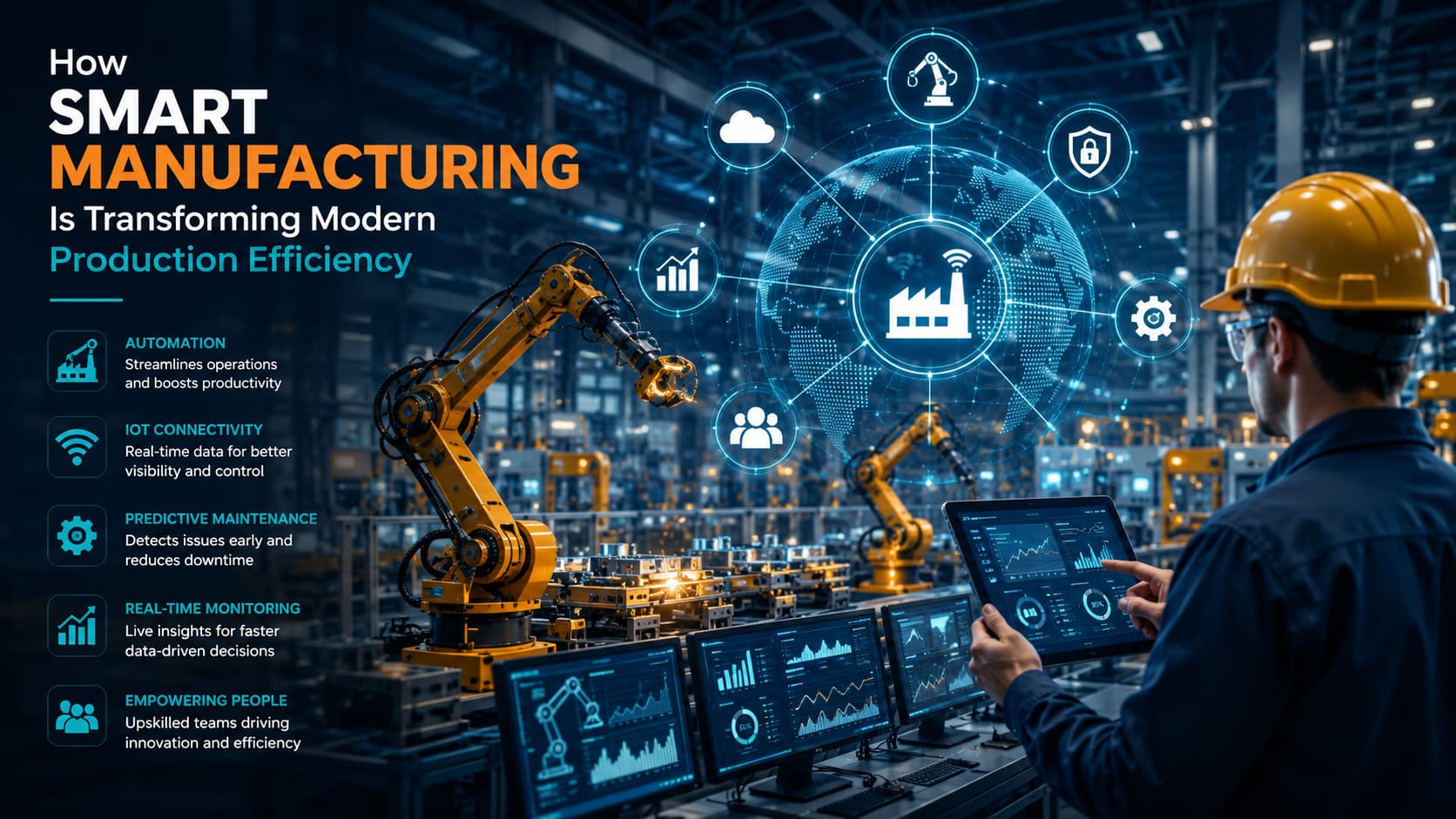
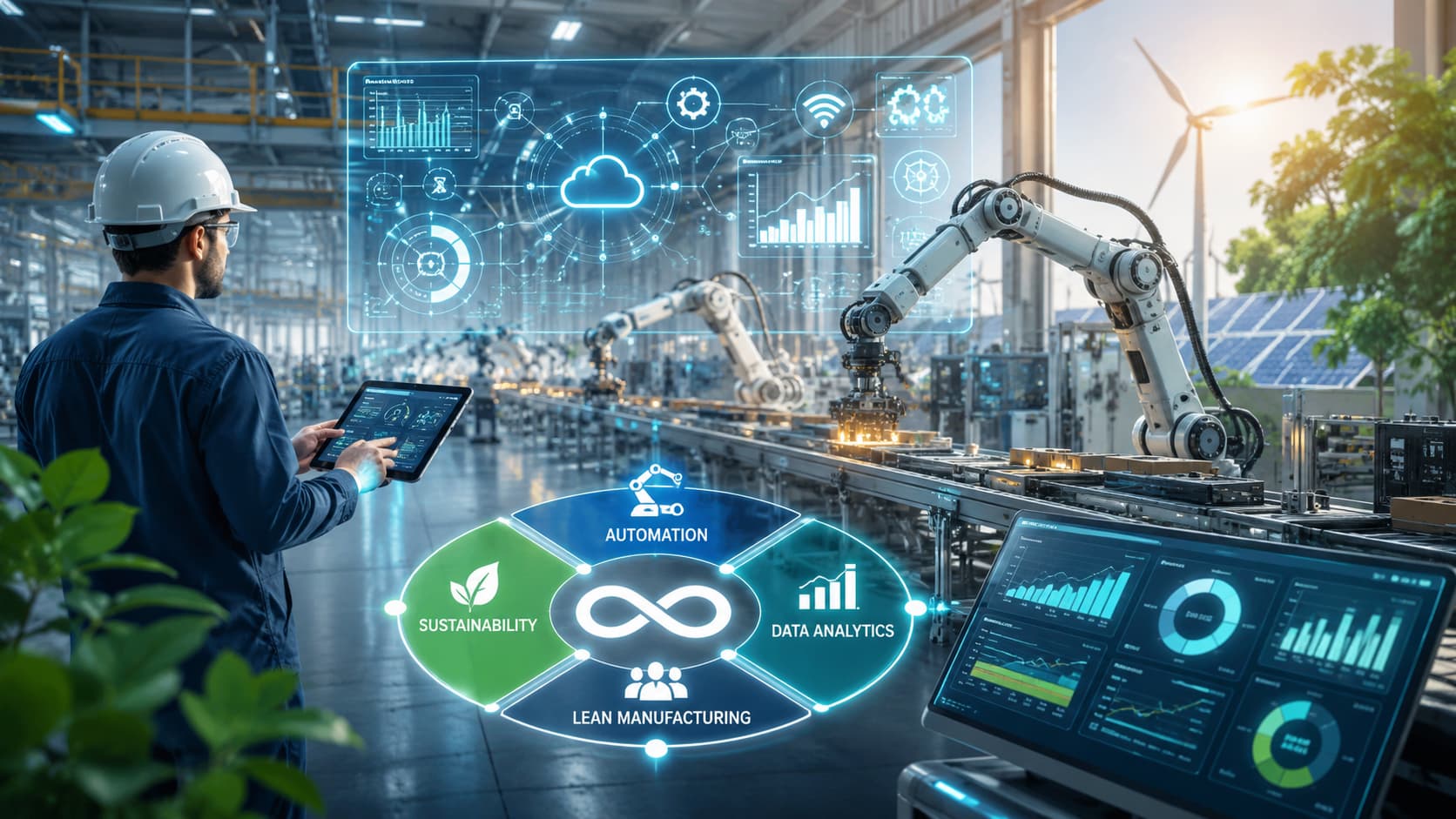
Learn how manufacturers are combining smart manufacturing technologies with lean manufacturing principles to build more agile, efficient, and sustainable production systems. This article explores automation, AI-driven analytics, energy efficiency, supply chain optimization, and continuous improvement strategies that help businesses reduce waste, improve productivity, and scale operations successfully. Discover how digital transformation supports long-term operational growth while helping manufacturers stay competitive in rapidly evolving industrial markets.
Modern manufacturers are increasingly combining smart manufacturing technologies with lean manufacturing principles to build faster, more efficient, and more sustainable production systems. Smart tools such as IoT sensors, automation, AI-driven analytics, and cloud-based monitoring help businesses reduce waste, improve decision-making, and strengthen operational agility. When integrated with lean methodologies, these technologies support continuous improvement while helping manufacturers scale without sacrificing quality or efficiency.
This combination matters because manufacturers now face rising energy costs, supply chain disruptions, labour shortages, and changing customer expectations. Businesses that successfully merge lean manufacturing with digital transformation are often better positioned to improve productivity, increase flexibility, and maintain long-term competitiveness. According to research from the World Economic Forum and McKinsey & Company, smart factory initiatives can significantly improve production efficiency, reduce downtime, and lower operational waste when implemented strategically.
What Is the Connection Between Smart Manufacturing and Lean Manufacturing?
Smart manufacturing uses digital technologies to improve production visibility, automation, and decision-making. Lean manufacturing focuses on eliminating waste, improving workflow efficiency, and maximising customer value. Together, they create production systems that are data-driven, efficient, adaptable, and scalable.
Lean manufacturing traditionally relies on continuous improvement methods such as:
- Kaizen
- Just-in-Time (JIT) production
- Value stream mapping
- Root cause analysis
- Standardised work processes
- Waste reduction initiatives
Smart manufacturing strengthens these practices by providing real-time operational data, predictive insights, and automated monitoring.
How Digital Technology Enhances Lean Principles
| Lean Objective | Smart Technology Support |
|---|---|
| Reduce waste | AI analytics identify inefficiencies quickly |
| Improve workflow | Automation streamlines repetitive tasks |
| Increase quality | IoT sensors detect defects in real time |
| Lower downtime | Predictive maintenance prevents failures |
| Improve inventory control | Smart supply chain tracking improves visibility |
| Support continuous improvement | Real-time dashboards provide actionable insights |
This integration creates a more responsive manufacturing environment where decisions are based on accurate operational data rather than assumptions.
Why Manufacturers Are Combining Lean and Smart Technologies
Manufacturers are adopting this combined approach because traditional production methods alone are no longer enough to remain competitive. Businesses need both operational discipline and digital intelligence to manage modern production demands effectively.
Several factors are accelerating this shift:
- Rising operational costs
- Increased customer demand for customisation
- Pressure to improve sustainability
- Supply chain instability
- Labour shortages in manufacturing sectors
- Growing demand for faster production cycles
Companies that combine automation, lean workflows, and predictive analytics often achieve stronger operational resilience and better scalability.
Automation in Lean Manufacturing Environments
Automation supports lean manufacturing by reducing manual inefficiencies, improving consistency, and freeing employees to focus on higher-value tasks. The goal is not simply to automate everything but to automate processes strategically where waste reduction and productivity gains are most valuable.
Areas Where Automation Supports Lean Operations
Repetitive Production Tasks
Robotic systems can perform repetitive assembly tasks with greater speed and consistency while reducing production errors.
Inventory and Warehouse Management
Automated inventory systems improve stock accuracy and reduce excess inventory costs.
Quality Control
Machine vision systems and AI-powered inspection tools can identify defects faster than manual inspection methods.
Predictive Maintenance
IoT-enabled monitoring systems detect equipment issues before breakdowns occur, helping manufacturers avoid unplanned downtime.
Benefits of Smart Automation in Lean Systems
- Faster production cycles
- Reduced operational waste
- Improved product consistency
- Lower maintenance costs
- Better workforce productivity
- Increased scalability
Manufacturers that implement automation carefully often see stronger long-term returns because lean systems prevent unnecessary technological complexity.
Using Data Analytics for Continuous Process Improvement
Data analytics plays a critical role in modern lean manufacturing because it allows businesses to identify inefficiencies in real time. Instead of relying only on periodic reviews, manufacturers can now continuously monitor production performance.
Real-time analytics help businesses answer important operational questions quickly:
- Where is production slowing down?
- Which machines are consuming excess energy?
- Which workflows create bottlenecks?
- Which suppliers affect lead times?
- Where are defects occurring most frequently?
Key Manufacturing Metrics Often Tracked
| Operational Area | Common Metrics |
|---|---|
| Production efficiency | OEE (Overall Equipment Effectiveness) |
| Equipment performance | Downtime frequency |
| Quality management | Defect rates |
| Energy usage | Consumption per production cycle |
| Inventory control | Stock turnover ratio |
| Supply chain performance | Delivery lead times |
AI-powered analytics platforms can also identify patterns that human teams may overlook, helping manufacturers make more informed operational decisions.
Energy Efficiency and Sustainable Manufacturing
Sustainable manufacturing has become a major priority for businesses facing environmental regulations, investor scrutiny, and rising utility costs. Combining lean manufacturing with smart technology helps reduce both operational waste and environmental impact.
Smart manufacturing systems improve sustainability through:
- Real-time energy monitoring
- Automated energy optimization
- Reduced material waste
- Smarter resource allocation
- Lower emissions from production inefficiencies
Examples of Sustainable Smart Manufacturing Practices
Smart Energy Monitoring
Sensors track electricity consumption across production equipment, allowing manufacturers to identify inefficient machinery.
Automated Shutdown Systems
Machines automatically enter low-energy modes during idle periods.
Predictive Maintenance
Well-maintained equipment consumes less energy and operates more efficiently.
Digital Supply Chain Management
Smarter logistics systems reduce transportation inefficiencies and inventory waste.
Research from the International Energy Agency shows that industrial energy efficiency improvements remain one of the most effective ways to reduce manufacturing emissions while lowering operational costs.
Supply Chain Optimization Through Smart Manufacturing
Supply chain disruptions have highlighted the importance of visibility and flexibility in manufacturing operations. Smart manufacturing technologies improve supply chain resilience by providing real-time operational insights across suppliers, logistics, inventory, and production schedules.
Smart Supply Chain Technologies
- Cloud-based inventory systems
- RFID tracking
- AI demand forecasting
- Digital twins
- Supplier performance dashboards
- Automated procurement tools
These systems help manufacturers respond more quickly to changing market conditions while supporting lean inventory strategies.
Benefits of Smarter Supply Chains
| Challenge | Smart Manufacturing Solution |
|---|---|
| Inventory shortages | Real-time stock tracking |
| Supplier delays | Predictive supplier analytics |
| Production interruptions | Automated scheduling adjustments |
| Excess inventory | Demand forecasting tools |
| Delivery inefficiencies | Logistics optimization software |
Stronger supply chain visibility also supports better customer service by improving delivery accuracy and production forecasting.
How Digital Tools Support Continuous Improvement
Continuous improvement remains at the heart of lean manufacturing. Digital tools simply make improvement efforts faster, more measurable, and easier to scale.
Modern continuous improvement systems often include:
- Real-time production dashboards
- Mobile maintenance reporting
- AI-driven workflow analysis
- Cloud collaboration platforms
- Digital performance tracking
- Automated reporting systems
These tools help management teams identify improvement opportunities quickly while encouraging stronger collaboration between departments.
Practical Example
A manufacturer using IoT-connected production equipment may notice that one machine consistently operates below expected efficiency levels during certain shifts. Real-time analytics can identify the root cause faster, allowing teams to adjust staffing, maintenance schedules, or workflow processes before the issue affects overall production output.
This proactive approach supports lean manufacturing’s long-standing focus on incremental operational improvement.
Common Challenges When Combining Lean and Smart Manufacturing
Despite the benefits, integrating digital technologies into lean systems is not always straightforward. Poor implementation strategies can increase complexity instead of reducing waste.
Common Challenges
High Initial Investment
Smart manufacturing technologies often require significant upfront spending.
Workforce Training Gaps
Employees may need training to operate and manage digital systems effectively.
Data Overload
Too much unstructured operational data can overwhelm decision-makers.
Integration Issues
Older manufacturing equipment may not integrate easily with modern platforms.
Resistance to Change
Teams accustomed to traditional workflows may hesitate to adopt new technologies.
Successful manufacturers usually begin with smaller pilot programmer before expanding automation and analytics across operations.
Best Practices for Combining Smart and Lean Manufacturing
Manufacturers achieve better long-term results when technology investments support clear operational goals rather than following digital trends blindly.
Recommended Best Practices
- Start with lean process optimization before automation
- Focus on measurable operational problems
- Use data to support continuous improvement
- Prioritize workforce training
- Implement scalable technology gradually
- Track ROI consistently
- Align sustainability goals with operational strategy
Businesses that maintain a strong balance between technology, people, and operational discipline often achieve the most sustainable growth.
The Future of Sustainable Manufacturing
The future of manufacturing will likely depend on the ability to combine operational efficiency with digital intelligence. Manufacturers that integrate smart technologies into lean production systems are better equipped to handle economic uncertainty, evolving customer demands, and sustainability expectations.
Emerging technologies such as AI-driven production planning, autonomous robotics, digital twins, and advanced predictive analytics will continue reshaping industrial operations over the next decade. However, lean manufacturing principles will remain highly relevant because efficiency, waste reduction, and continuous improvement are timeless operational priorities.
The manufacturers most likely to succeed long term are not simply the most automated. They are the businesses that use technology strategically to create smarter, leaner, more resilient production systems that adapt quickly while maintaining operational discipline.
What is the difference between smart manufacturing and lean manufacturing?
Smart manufacturing uses digital technologies like IoT sensors, AI analytics, and automation to improve production efficiency and visibility. Lean manufacturing focuses on reducing waste, improving workflows, and maximising customer value. When combined, they create agile manufacturing systems that improve productivity, reduce operational costs, and support long-term sustainable growth across modern industrial operations.
How does automation improve lean manufacturing processes?
Automation improves lean manufacturing by reducing repetitive manual tasks, minimising production errors, and increasing workflow consistency. Technologies such as robotics, machine vision systems, and predictive maintenance tools help manufacturers reduce downtime, improve product quality, and eliminate operational waste. This allows businesses to scale production more efficiently while maintaining lean operational principles and continuous improvement strategies.
Why is data analytics important in smart manufacturing?
Data analytics is important in smart manufacturing because it provides real-time insights into production performance, equipment efficiency, and operational bottlenecks. Manufacturers use analytics tools to monitor energy consumption, track downtime, improve inventory management, and identify process inefficiencies quickly. This supports faster decision-making, stronger quality control, and continuous process optimisation across manufacturing environments.
How can smart manufacturing support sustainability goals?
Smart manufacturing supports sustainability goals by improving energy efficiency, reducing material waste, and optimising resource usage throughout production systems. Technologies such as IoT monitoring, automated energy controls, and predictive maintenance help manufacturers lower emissions and reduce operational inefficiencies. These sustainable manufacturing practices also help businesses manage rising energy costs while improving long-term environmental performance.
What are the biggest challenges when combining lean and smart manufacturing?
The biggest challenges include high implementation costs, workforce training requirements, data management complexity, and integrating modern technologies with older manufacturing equipment. Some businesses also struggle with resistance to operational change. Successful manufacturers usually adopt smart technologies gradually, starting with targeted pilot programmes that align with existing lean manufacturing goals and measurable business outcomes.
How does smart manufacturing improve supply chain efficiency?
Smart manufacturing improves supply chain efficiency by increasing visibility across inventory, suppliers, logistics, and production planning. Technologies such as AI forecasting, RFID tracking, and cloud-based inventory systems help manufacturers reduce delays, optimise stock levels, and respond faster to market demand changes. This creates more flexible and resilient supply chains that support lean inventory management strategies.
What are the long-term benefits of combining smart technology with lean manufacturing?
Combining smart technology with lean manufacturing helps businesses improve operational efficiency, scalability, product quality, and cost control over the long term. Manufacturers also gain stronger production flexibility, better sustainability performance, and improved resilience against supply chain disruptions. This integrated approach supports continuous improvement while helping companies adapt to changing customer expectations and competitive market conditions.