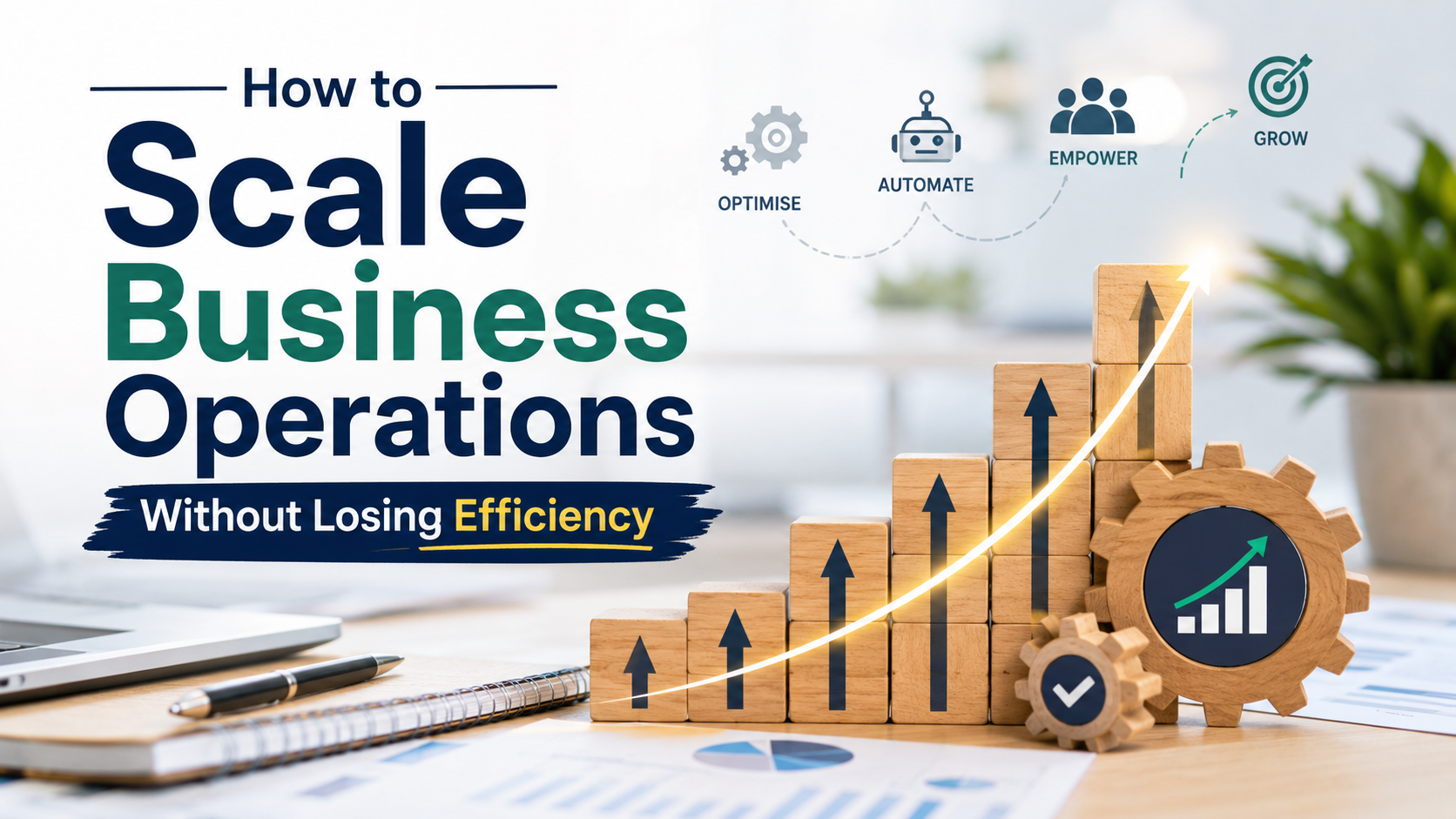
Scaling a business successfully is not just about growing faster. It is about building smarter systems that support long-term efficiency, profitability, and customer satisfaction. This article explores practical strategies for scaling operations through workflow optimization, automation, team development, and operational planning. Learn how businesses can avoid common growth mistakes, improve productivity, and create sustainable systems that support expansion without sacrificing performance or quality.
Growth is exciting, but scaling a business successfully requires far more than increasing sales or hiring more people. Many companies expand too quickly, add unnecessary complexity, or overload their teams without improving the systems that support long-term growth. The result is often reduced productivity, rising costs, inconsistent customer experiences, and internal confusion.
Efficient scaling is about building a business that can handle increased demand without sacrificing quality, profitability, or operational control. It means creating repeatable systems, improving communication, using technology wisely, and ensuring every part of the organization can grow sustainably. Businesses that scale effectively focus on structure before speed. They understand that growth without operational efficiency can create bigger problems instead of bigger opportunities.
Whether you run a startup, a growing SME, or an established company preparing for expansion, operational scaling is a long-term challenge that requires planning, discipline, and adaptability. The good news is that businesses do not need to become larger and more complicated to grow successfully. In many cases, smarter systems and clearer processes create better results than simply adding more resources.
Build Strong Operational Foundations First
Many scaling problems begin long before expansion actually happens. Businesses often try to grow while relying on informal processes, unclear responsibilities, or outdated workflows. These weaknesses may seem manageable in a small team, but they quickly become obstacles as operations increase.
Before scaling, businesses should focus on strengthening their operational foundation. This includes:
- Documenting repeatable workflows
- Defining clear team responsibilities
- Standardizing customer service procedures
- Creating consistent communication systems
- Tracking performance metrics regularly
- Identifying operational bottlenecks early
A strong operational structure reduces confusion and allows teams to work more efficiently as demand grows. It also makes onboarding new employees easier because processes are already defined and organized.
Focus on Process Optimization Before Expansion
Scaling efficiently is not about doing more work manually. It is about improving how work gets done. Businesses that optimize workflows before expanding often grow faster with fewer operational problems.
Process optimization starts with identifying repetitive tasks, delays, and unnecessary steps. Even small inefficiencies become expensive when operations scale.
Key areas to review include:
Workflow Management
Examine how work moves through the business. Delays often occur because approvals, communication, or responsibilities are unclear. Streamlined workflows reduce wasted time and improve productivity.
Customer Experience Processes
As customer demand grows, service consistency becomes more difficult. Businesses should standardize customer interactions, response times, and support systems to maintain satisfaction during expansion.
Internal Communication
Poor communication slows teams down and creates avoidable mistakes. Clear reporting structures and collaboration tools help businesses maintain alignment as departments grow.
Resource Allocation
Scaling companies must monitor how time, budgets, and staff are being used. Inefficient resource allocation often leads to burnout, overspending, or underperforming teams.
Use Automation Strategically
Automation can significantly improve operational efficiency when used correctly. However, automation should support business processes, not replace thoughtful decision-making or human oversight.
The most effective automation strategies focus on repetitive, time-consuming tasks that reduce productivity when handled manually.
Common areas where automation helps include:
- Invoice and payment processing
- Email marketing campaigns
- Customer relationship management
- Inventory tracking
- Appointment scheduling
- Reporting and analytics
- Employee onboarding tasks
- Customer support ticket routing
Automation reduces errors, saves time, and allows employees to focus on higher-value work. However, businesses should avoid automating broken processes. Poor workflows become bigger problems when automated at scale.
Successful businesses usually automate gradually, testing systems carefully before expanding usage across operations.
Strengthen Team Structure and Delegation
One of the biggest operational challenges during growth is leadership overload. Founders and managers often remain involved in every decision, which slows progress and creates bottlenecks.
Efficient scaling requires trust, delegation, and clearly defined leadership structures.
Create Role Clarity
Employees work more effectively when expectations are clear. As businesses grow, overlapping responsibilities often create confusion and inefficiency. Clearly defined roles improve accountability and reduce duplicated work.
Empower Decision-Making
Teams should not rely on senior leadership for every operational decision. Empowering managers and department leads improves responsiveness and speeds up execution.
Hire for Scalability
Businesses should hire people who can adapt to changing environments, solve problems independently, and support long-term growth objectives. Flexible employees often contribute more value during scaling phases than highly specialized hires alone.
Invest in Training
Rapid growth exposes skill gaps quickly. Ongoing training ensures employees can manage new tools, systems, and responsibilities effectively as operations evolve.
Maintain Financial Efficiency During Growth
Revenue growth does not always mean operational success. Many businesses scale sales while losing profitability because costs increase faster than efficiency.
Operational scaling should improve financial performance, not weaken it.
Businesses can maintain financial efficiency by:
- Monitoring operational costs carefully
- Tracking profit margins consistently
- Avoiding unnecessary hiring
- Investing selectively in technology
- Forecasting cash flow regularly
- Expanding in manageable stages
- Prioritizing sustainable growth over rapid expansion
Overexpansion is one of the most common scaling mistakes. Businesses sometimes increase staffing, inventory, or marketing expenses before demand becomes stable enough to support those costs long term.
Measured growth is usually more sustainable than aggressive expansion driven by short-term momentum.
Standardize Systems Across the Business
As companies grow, inconsistency becomes a major operational risk. Different teams may develop separate methods, tools, or processes, creating confusion and reducing efficiency.
Standardization helps businesses maintain quality and predictability during expansion.
Areas that benefit from standardization include:
| Operational Area | Why Standardization Matters |
| Customer Support | Improves service consistency |
| Employee Onboarding | Speeds up training and integration |
| Reporting Systems | Simplifies performance tracking |
| Sales Processes | Creates predictable customer journeys |
| Project Management | Improves accountability and deadlines |
| Quality Control | Maintains product or service standards |
Standardization does not eliminate flexibility. Instead, it creates reliable frameworks that support consistent performance at scale.
Improve Operational Visibility With Data
Businesses cannot scale efficiently without understanding how operations are performing. Data provides visibility into productivity, customer behavior, profitability, and operational risks.
Important operational metrics may include:
- Customer acquisition costs
- Employee productivity
- Customer retention rates
- Delivery times
- Operational expenses
- Revenue per employee
- Profit margins
- Customer satisfaction scores
The goal is not to collect excessive data but to monitor information that directly supports decision-making.
Real-time visibility allows businesses to identify problems early and make adjustments before inefficiencies become expensive.
Avoid Common Scaling Mistakes
Many operational problems during growth are preventable. Businesses that scale successfully usually avoid several common mistakes.
Expanding Too Quickly
Rapid growth without operational readiness creates instability. Businesses should scale at a pace their systems and teams can support.
Ignoring Company Culture
As organizations grow, culture can weaken if communication and leadership become disconnected. Strong culture supports collaboration, accountability, and employee retention.
Adding Too Many Tools
Businesses sometimes adopt excessive software solutions that complicate workflows instead of improving them. Technology should simplify operations, not create confusion.
Failing to Document Processes
Undocumented systems rely too heavily on individual employees. This creates operational risk when teams expand or staff changes occur.
Neglecting Customer Experience
Growth should never reduce service quality. Customers often notice operational problems before leadership does.
Adapt Operations Continuously
Scaling is not a one-time process. Operational needs change as businesses evolve, markets shift, and customer expectations grow.
Companies that scale efficiently remain adaptable. They review systems regularly, improve workflows continuously, and stay open to operational changes that support long-term sustainability.
Continuous improvement often involves:
- Reviewing performance data regularly
- Gathering employee feedback
- Updating outdated workflows
- Evaluating technology effectiveness
- Improving cross-team collaboration
- Refining operational priorities
Businesses that treat efficiency as an ongoing strategy rather than a temporary project are usually better positioned for sustainable growth.
Common Questions
1. How can businesses scale operations without reducing efficiency?
Businesses can scale efficiently by improving workflows, automating repetitive tasks, standardizing processes, and strengthening team structures before expanding operations. Clear systems reduce operational strain during growth.
2. Why is process standardization important during scaling?
Process standardization improves consistency, reduces confusion, and helps teams maintain quality as businesses grow. It also simplifies onboarding and operational management across departments.
3. What are the biggest operational mistakes businesses make when scaling?
Common mistakes include overexpansion, poor communication, unclear responsibilities, lack of process documentation, and investing in unnecessary tools before operational systems are ready.
4. How does automation support business growth?
Automation saves time, reduces manual errors, improves productivity, and allows employees to focus on higher-value tasks that support strategic growth and customer service.
5. What role does leadership play in operational scaling?
Leadership ensures operational alignment, delegation, accountability, and communication. Strong leadership structures help businesses scale without creating bottlenecks or confusion.
The Bottom Line
Scaling business operations successfully requires more than ambition or increased demand. Sustainable growth depends on operational discipline, efficient systems, strong leadership, and clear processes that can support expansion without creating unnecessary complexity.
Businesses that focus on workflow optimization, strategic automation, team development, financial discipline, and process standardization are more likely to grow without sacrificing productivity or customer satisfaction. At the same time, avoiding common scaling mistakes such as overexpansion, poor communication, and inconsistent systems helps reduce operational risks during growth.
The most successful companies understand that efficiency is not the opposite of growth. In reality, efficient operations create the foundation that makes long-term growth possible. By building scalable systems early and adapting continuously, businesses can expand confidently while maintaining stability, profitability, and service quality.