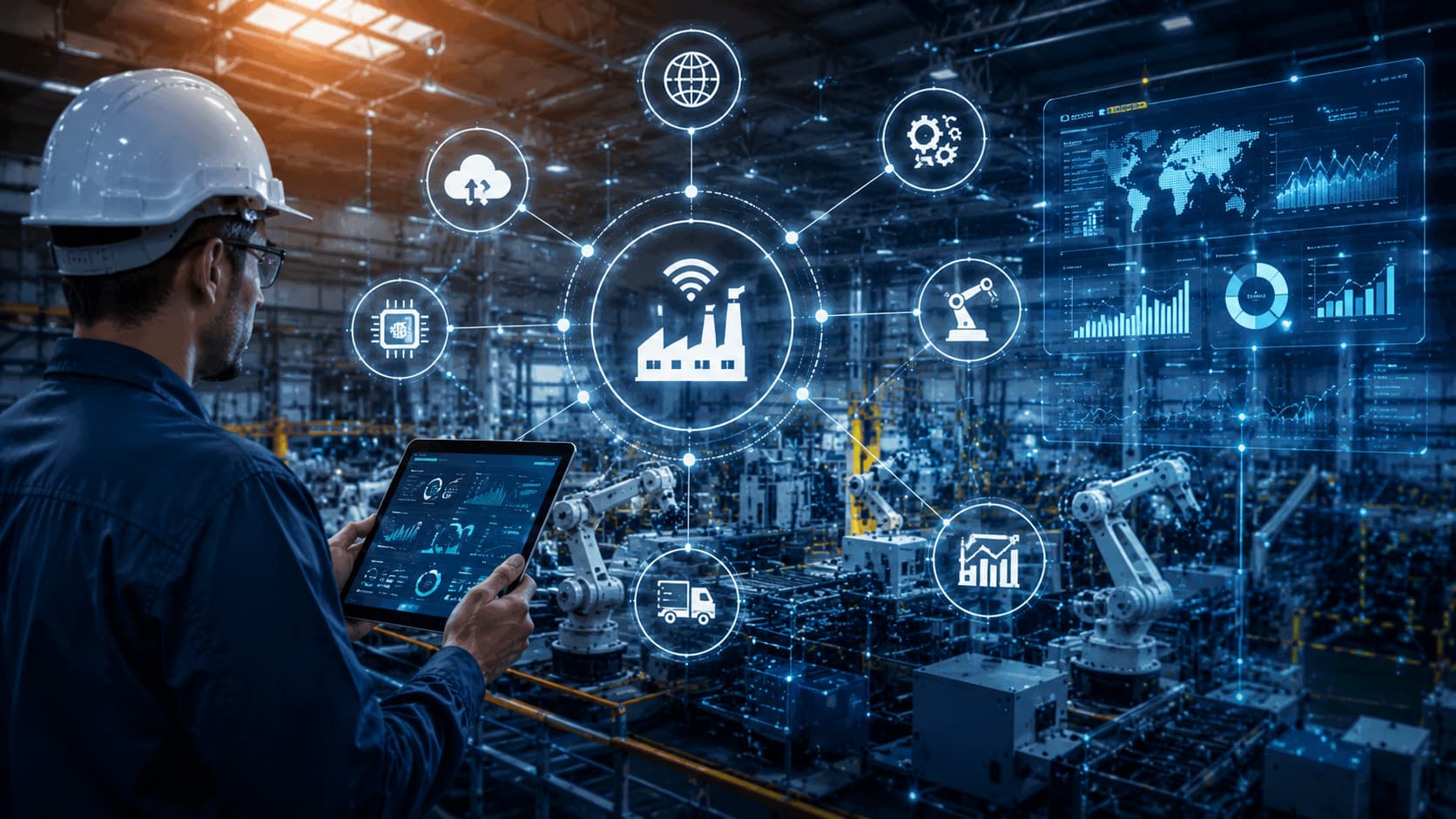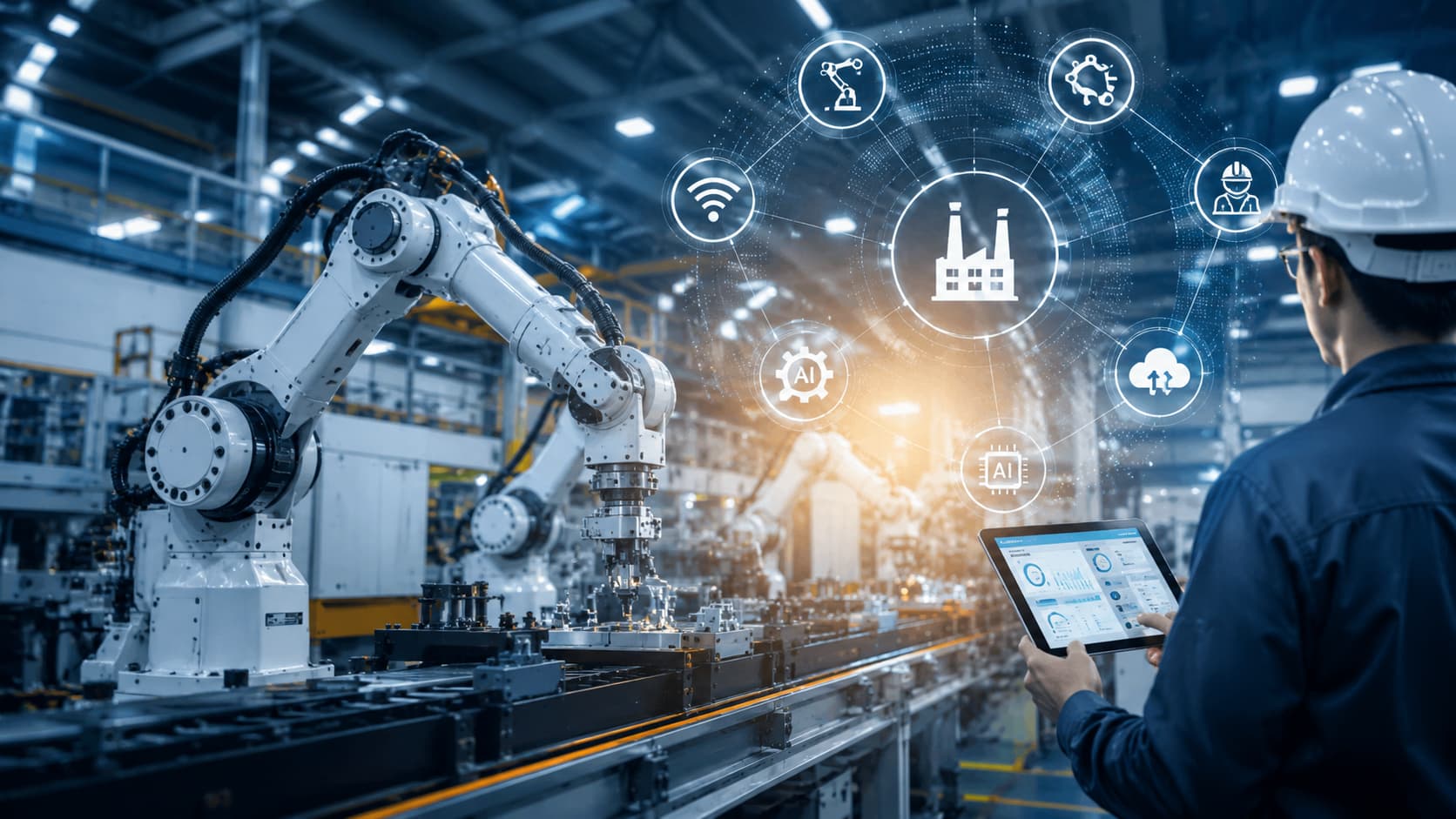
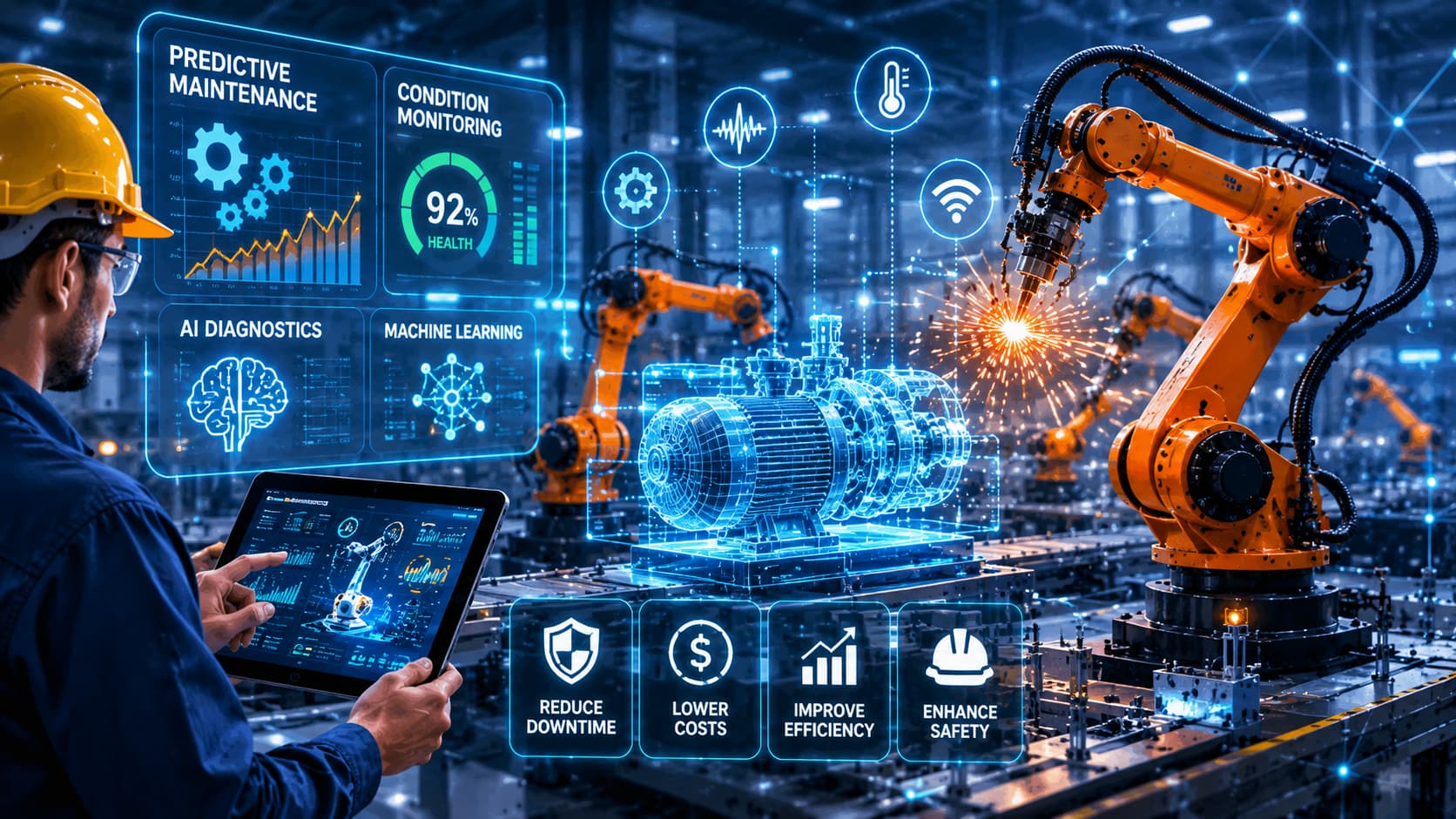
Predictive maintenance tools and robotics are transforming modern manufacturing by helping businesses reduce equipment failures, improve workplace safety, and maintain more reliable production performance. By combining real-time machine monitoring, artificial intelligence, robotics automation, and data-driven maintenance strategies, manufacturers can improve operational efficiency while lowering long-term maintenance and production costs.
As manufacturing environments become more connected and production demands continue increasing, businesses are moving away from reactive maintenance models and manual production systems. Instead of waiting for machinery to fail, manufacturers now use predictive analytics, condition monitoring systems, and AI-powered diagnostics to detect potential problems before they disrupt operations. At the same time, industrial robotics are improving production precision, increasing scalability, and reducing repetitive manual tasks across factories worldwide.
Industries such as automotive manufacturing, electronics, pharmaceuticals, logistics, food processing, aerospace, and heavy engineering are rapidly adopting predictive maintenance technologies and robotic automation systems. These technologies support smarter decision-making, improve operational reliability, and help businesses remain competitive in increasingly demanding production environments.
What Is Predictive Maintenance in Manufacturing?
Predictive maintenance is a proactive maintenance strategy that uses sensors, real-time machine data, and analytics software to identify potential equipment failures before they occur. This approach helps manufacturers reduce downtime, extend machinery lifespan, and improve overall operational reliability.
Unlike reactive maintenance, which addresses failures after breakdowns occur, predictive maintenance focuses on prevention through continuous equipment monitoring and intelligent diagnostics.
Common predictive maintenance technologies include:
- Condition monitoring systems
- Smart industrial sensors
- AI-powered diagnostics software
- Vibration analysis tools
- Thermal imaging systems
- Machine learning analytics
- Industrial IoT monitoring platforms
These systems allow manufacturers to make maintenance decisions based on real equipment conditions rather than fixed service schedules alone.
How Predictive Maintenance Improves Manufacturing Performance
Predictive maintenance improves manufacturing performance by reducing unexpected equipment failures, improving maintenance planning, and increasing machine availability. Real-time monitoring allows businesses to identify operational problems early and respond before production disruptions occur.
This proactive approach supports more stable and efficient manufacturing operations.
Reduced Equipment Downtime
Predictive maintenance systems continuously monitor machinery conditions to detect abnormal performance patterns before failures happen. This helps manufacturers avoid costly production interruptions and emergency repair situations.
Benefits of reduced downtime include:
- Improved production continuity
- Lower emergency maintenance costs
- Better equipment utilization
- Reduced operational delays
- Higher manufacturing output
Many manufacturers report significant reductions in unplanned downtime after implementing predictive maintenance technologies.
Improved Maintenance Scheduling
Predictive maintenance allows businesses to perform maintenance only when equipment conditions require attention. This improves maintenance efficiency while reducing unnecessary inspections and service interruptions.
Manufacturers can:
- Prioritize critical repairs
- Schedule maintenance during planned downtime
- Reduce unnecessary part replacements
- Improve technician productivity
- Extend equipment lifespan
This data-driven approach helps businesses allocate maintenance resources more effectively.
The Role of Machine Learning in Predictive Maintenance
Machine learning helps predictive maintenance systems analyze large volumes of equipment data and identify patterns linked to potential failures. These AI-driven systems improve maintenance accuracy by continuously learning from operational behavior and historical performance data.
Machine learning models analyze:
- Temperature fluctuations
- Vibration patterns
- Energy consumption
- Pressure readings
- Machine operating cycles
Why Machine Learning Matters
Machine learning improves maintenance operations by identifying subtle performance changes that human operators may not detect early enough.
Key advantages include:
- Faster fault detection
- More accurate failure predictions
- Improved maintenance planning
- Reduced diagnostic errors
- Better operational forecasting
As manufacturing systems generate larger amounts of operational data, machine learning becomes increasingly valuable for predictive maintenance accuracy and efficiency.
How Robotics Are Transforming Modern Manufacturing
Industrial robotics improve manufacturing efficiency by automating repetitive tasks, increasing production precision, and supporting faster production cycles. Robots help manufacturers improve consistency, reduce human error, and scale production more effectively.
Modern robotics systems are now used across nearly every stage of manufacturing operations.
Common Applications of Robotics in Manufacturing
Manufacturers use robotics for:
- Automated assembly
- Welding operations
- Packaging and palletizing
- Material handling
- Quality inspection
- Painting and coating
- Precision component placement
Robotics are especially valuable in industries requiring high precision and continuous production consistency.
How Robotics Improve Production Efficiency
Robotic systems operate continuously with high accuracy and repeatability. Unlike manual operations, robots maintain consistent performance without fatigue, improving both productivity and product quality.
Key benefits include:
- Faster production speed
- Improved product consistency
- Reduced manufacturing defects
- Better workplace safety
- Increased operational scalability
- Lower repetitive labor strain
Many manufacturers combine robotics with automation software and AI-driven monitoring systems to create smarter production environments.
Robotics and Workplace Safety in Manufacturing
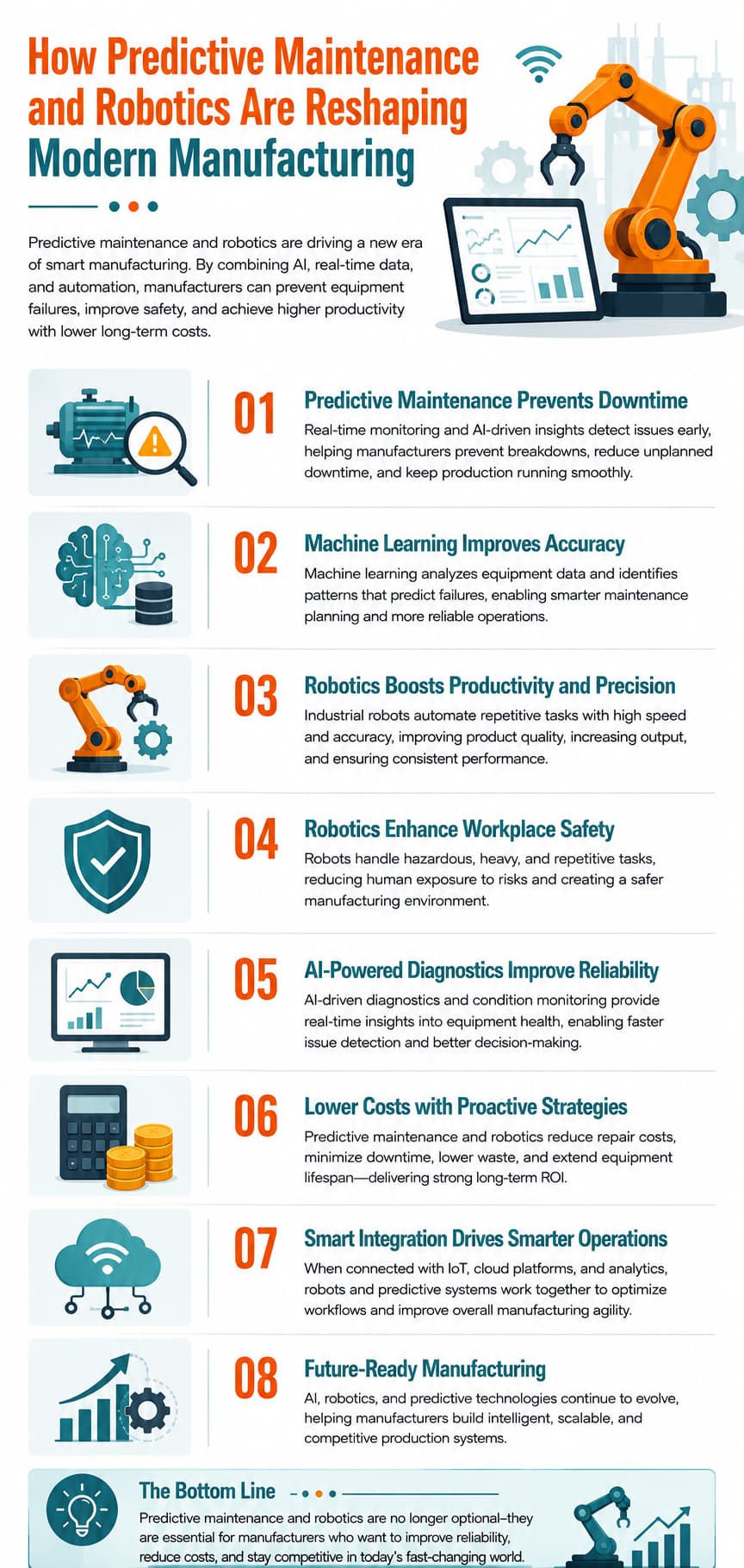
Industrial robotics improve workplace safety by handling hazardous, repetitive, or physically demanding tasks that may expose workers to injury risks. Automation reduces direct human interaction with dangerous equipment and high-risk production environments.
Robotics help improve safety in areas involving:
- Heavy lifting
- High-temperature processes
- Chemical exposure
- Repetitive motion tasks
- Precision cutting equipment
Why Safety Improvements Matter
Improved workplace safety benefits both employees and manufacturers by reducing accidents, lowering compensation claims, and improving workforce reliability.
Safety-focused automation also supports:
- Better employee retention
- Reduced production interruptions
- Improved regulatory compliance
- Stronger operational consistency
Many manufacturers now view robotics as both a productivity tool and a long-term workplace safety investment.
AI-Powered Diagnostics and Condition Monitoring
AI-powered diagnostics use connected sensors and advanced analytics to monitor machinery performance continuously and detect operational abnormalities in real time. These systems help manufacturers respond quickly to maintenance risks before failures affect production.
Condition monitoring systems track:
- Machine vibrations
- Motor temperature
- Lubrication conditions
- Acoustic signals
- Pressure variations
- Rotational performance
Benefits of AI-Driven Monitoring
AI-powered monitoring systems improve manufacturing reliability through:
- Early fault detection
- Faster maintenance response
- Reduced inspection delays
- Improved repair accuracy
- Better production forecasting
Manufacturers can also use AI diagnostics to improve long-term equipment planning and capital investment decisions.
Long-Term Cost Benefits of Predictive Maintenance and Robotics
Predictive maintenance and robotics reduce long-term manufacturing costs by improving operational efficiency, lowering downtime, reducing waste, and extending equipment lifespan. Although implementation costs can be significant initially, many businesses achieve strong long-term returns on investment.
Manufacturers often reduce costs through:
- Lower repair expenses
- Reduced production disruptions
- Improved energy efficiency
- Better resource allocation
- Reduced material waste
- Higher production output
Why Proactive Strategies Save Money
Reactive maintenance often leads to emergency repairs, production delays, and unexpected operational costs. Predictive maintenance allows manufacturers to plan maintenance activities more efficiently and avoid larger operational disruptions.
Similarly, robotics improve production consistency and reduce costly manufacturing errors over time.
Combining Robotics With Smart Manufacturing Systems
Manufacturers increasingly integrate robotics with Industrial IoT platforms, cloud manufacturing systems, and AI-driven analytics to create smarter and more connected production environments.
Connected robotic systems can:
- Share production data in real time
- Adjust workflows automatically
- Coordinate with other machines
- Improve inventory management
- Support predictive maintenance scheduling
The Rise of Intelligent Automation
Smart manufacturing systems combine robotics, automation, and data analytics to improve production agility and operational flexibility.
Benefits include:
- Faster operational decision-making
- Improved production visibility
- Better supply chain coordination
- Reduced production bottlenecks
- Greater manufacturing scalability
These connected systems form a key foundation of Industry 4.0 manufacturing strategies.
Challenges of Adopting Predictive Maintenance and Robotics
While predictive maintenance and robotics offer major operational advantages, implementation also presents technical and organizational challenges. Manufacturers must carefully manage integration, workforce training, and infrastructure upgrades.
High Initial Investment
Advanced robotics systems, industrial sensors, AI software, and connected manufacturing platforms often require substantial upfront investment.
Costs may include:
- Equipment purchases
- Software integration
- Employee training
- Infrastructure upgrades
- Cybersecurity improvements
Many manufacturers adopt phased implementation strategies to manage investment more effectively.
Workforce Skill Gaps
As manufacturing technologies become more advanced, businesses increasingly need employees with technical skills in robotics maintenance, data analysis, and automation management.
Workforce development areas include:
- Robotics programming
- AI system monitoring
- Predictive maintenance analysis
- Industrial cybersecurity
- Automation troubleshooting
Manufacturers investing in employee training often achieve stronger long-term automation outcomes.
Future Trends in Predictive Maintenance and Robotics
Predictive maintenance and robotics technologies continue evolving through advancements in artificial intelligence, machine learning, Industrial IoT, and edge computing. These innovations are helping manufacturers create more autonomous and intelligent production systems.
Emerging trends include:
- Collaborative robots (cubits)
- Self-learning maintenance systems
- Autonomous mobile robots
- AI-driven production optimization
- Edge-based predictive analytics
- Cloud-connected robotics platforms
As these technologies mature, manufacturing operations will become increasingly adaptive, connected, and data-driven.
Final Thoughts
Predictive maintenance and robotics are reshaping modern manufacturing by improving operational reliability, reducing downtime, strengthening workplace safety, and increasing production efficiency. These technologies help manufacturers move from reactive operations toward smarter, more proactive production strategies.
The businesses gaining the greatest long-term value are those combining predictive maintenance, robotics, workforce development, and connected manufacturing systems into a unified operational strategy. As Industry 4.0 technologies continue advancing, predictive maintenance and intelligent robotics will remain central drivers of manufacturing innovation, scalability, and operational performance.
FAQs
What is predictive maintenance in manufacturing?
Predictive maintenance is a proactive maintenance approach that uses sensors, machine data, and analytics software to detect potential equipment problems before failures occur. Manufacturers use predictive maintenance to reduce downtime, improve machinery lifespan, lower repair costs, and maintain more reliable production performance across manufacturing operations.
How does machine learning improve predictive maintenance?
Machine learning improves predictive maintenance by analyzing operational data and identifying patterns linked to equipment failures. These systems continuously learn from machine performance, helping manufacturers detect problems earlier, improve maintenance accuracy, reduce diagnostic errors, and make more informed operational decisions based on real-time equipment conditions.
How do robotics improve manufacturing efficiency?
Robotics improve manufacturing efficiency by automating repetitive tasks, increasing production speed, and maintaining high levels of precision and consistency. Industrial robots reduce human error, improve product quality, lower labor strain, and support scalable production operations, especially in industries requiring continuous output and accurate manufacturing processes.
What industries benefit most from predictive maintenance and robotics?
Industries including automotive manufacturing, aerospace, pharmaceuticals, food processing, electronics, logistics, and heavy engineering benefit significantly from predictive maintenance and robotics. These sectors rely heavily on equipment reliability, precision manufacturing, and continuous production, making proactive maintenance and automation highly valuable for operational performance and cost reduction.
What are AI-powered diagnostics in manufacturing?
AI-powered diagnostics use connected sensors and advanced analytics software to monitor machinery performance and identify abnormal operating conditions. These systems help manufacturers detect faults early, improve maintenance response times, reduce downtime, and optimize equipment reliability through continuous real-time condition monitoring and intelligent performance analysis.
How do robotics improve workplace safety?
Robotics improve workplace safety by handling dangerous, repetitive, or physically demanding tasks that may expose workers to injury risks. Industrial robots reduce human interaction with hazardous machinery, heavy lifting, and high-temperature environments, helping manufacturers lower workplace accidents while improving operational consistency and employee safety.
What challenges do manufacturers face when adopting robotics and predictive maintenance?
Manufacturers often face challenges including high upfront investment costs, integration complexity, employee training requirements, and cybersecurity concerns. Successfully implementing predictive maintenance and robotics systems usually requires careful planning, infrastructure upgrades, skilled workforce development, and long-term operational strategies to maximize efficiency and return on investment.