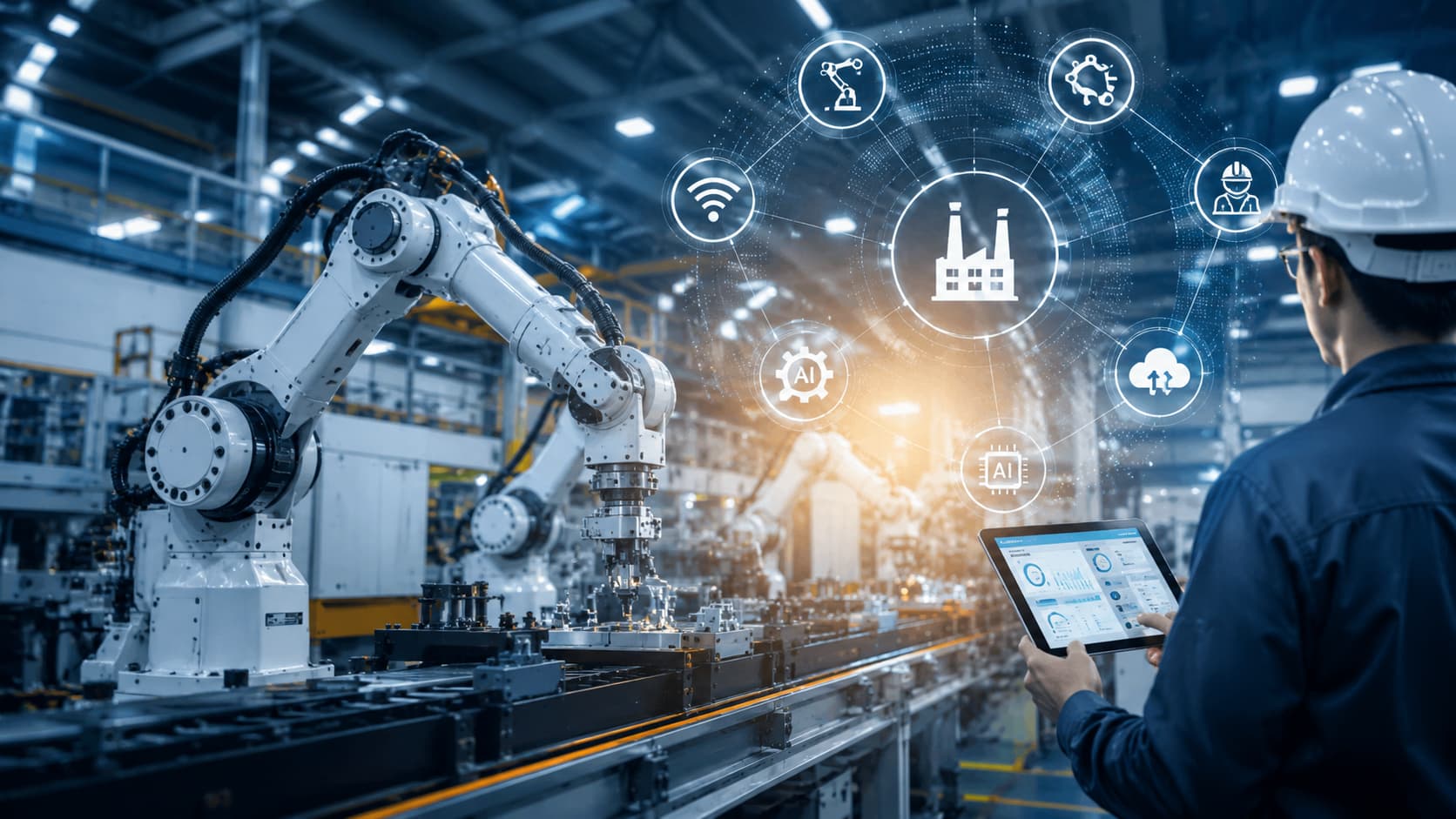
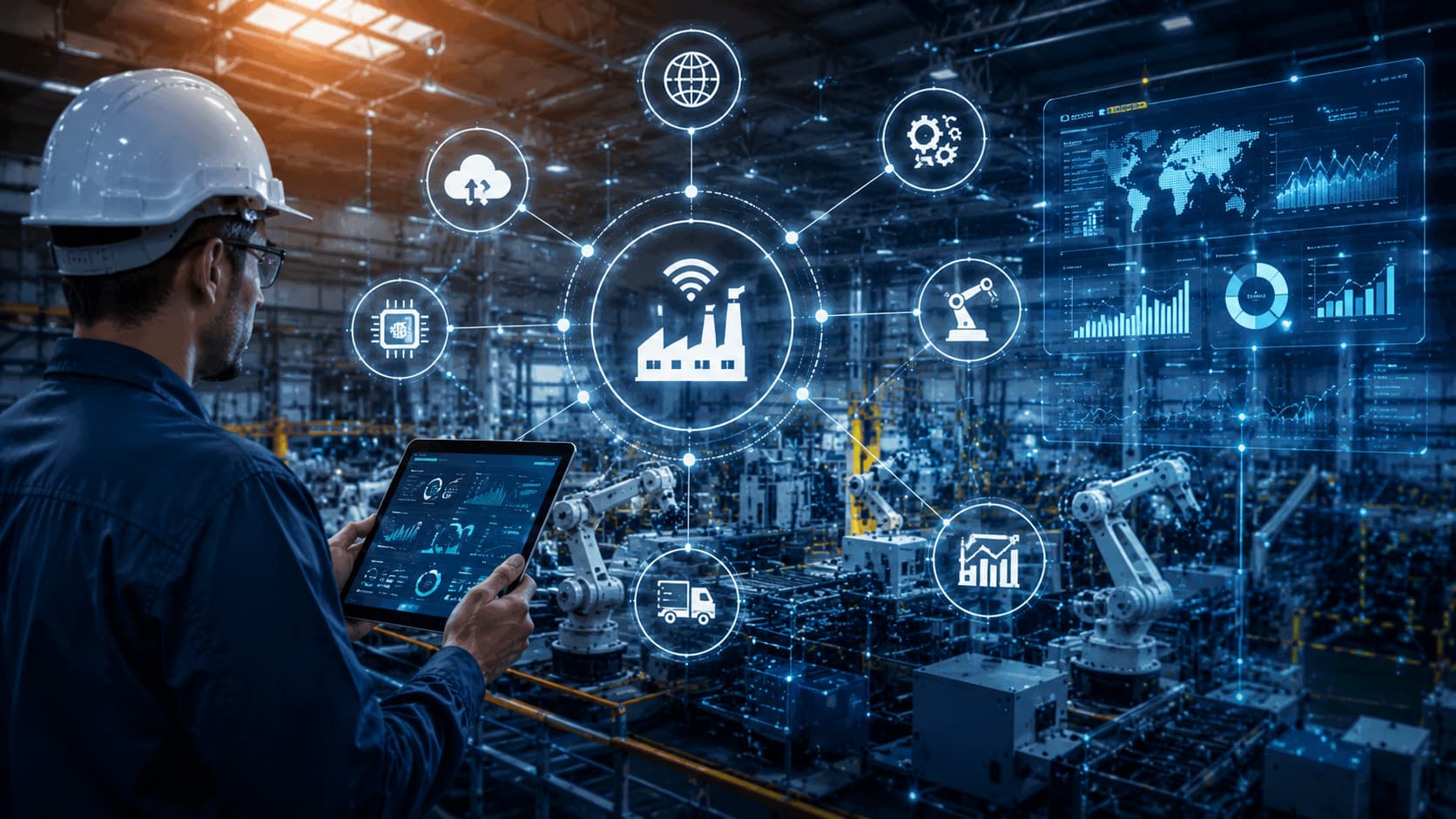
Industrial IoT and smart manufacturing solutions are transforming modern factories through connected devices, real-time monitoring, and intelligent data analysis. Manufacturers are using smart sensors, cloud-based systems, digital twins, and predictive analytics to improve efficiency, reduce downtime, and strengthen operational agility. This article explores how connected manufacturing technologies support smarter decision-making, improve supply chain visibility, and help businesses build more flexible, scalable, and competitive production environments in today’s rapidly evolving industrial landscape.
Industrial IoT (IIoT) and smart manufacturing solutions are transforming modern factories by connecting machines, sensors, software, and production systems through real-time data networks. These technologies help manufacturers improve operational efficiency, reduce downtime, strengthen supply chain visibility, and make faster, data-driven decisions across increasingly complex production environments.
As manufacturing becomes more competitive and customer expectations continue evolving, businesses are investing heavily in connected factory technologies. Industrial IoT applications allow manufacturers to monitor equipment performance, track production activity, optimize workflows, and respond to operational issues with greater speed and accuracy. At the same time, smart manufacturing solutions are helping organizations create more agile, flexible, and scalable production systems capable of adapting to changing market demands.
Industries including automotive, electronics, pharmaceuticals, logistics, food processing, and heavy manufacturing are rapidly adopting intelligent production technologies. From cloud-based manufacturing systems and digital twins to predictive maintenance and remote monitoring, Industrial IoT is becoming a central driver of Industry 4.0 innovation and long-term operational growth.
What Is Industrial IoT in Manufacturing?
Industrial IoT refers to the use of connected sensors, machines, devices, and software systems that collect and exchange real-time operational data within industrial environments. These connected technologies help manufacturers improve production visibility, automate decision-making, and optimize factory performance more efficiently.
Unlike traditional manufacturing systems that operate in isolated environments, Industrial IoT creates connected production ecosystems where machines communicate continuously through secure industrial networks.
Common Industrial IoT technologies include:
- Smart sensors
- Connected production equipment
- Cloud manufacturing platforms
- Edge computing devices
- Predictive maintenance systems
- Real-time monitoring software
- Digital twin technology
- Industrial data analytics tools
Together, these systems create smarter manufacturing environments capable of improving productivity, operational reliability, and production flexibility.
How Smart Manufacturing Solutions Improve Factory Operations
Smart manufacturing solutions improve factory operations by combining automation, connected devices, data analytics, and intelligent monitoring systems into a unified production environment. These systems help manufacturers improve efficiency, reduce operational risks, and respond faster to changing production demands.
Manufacturers increasingly rely on connected technologies to support both daily operations and long-term strategic planning.
Real-Time Data Collection and Production Visibility
Real-time data collection allows manufacturers to monitor equipment performance, production output, and operational conditions continuously. This visibility helps businesses identify inefficiencies, reduce bottlenecks, and improve overall production management.
Real-time monitoring supports:
- Faster operational decision-making
- Improved production scheduling
- Better equipment performance tracking
- Reduced production delays
- Enhanced inventory management
- Improved workforce coordination
For example, factory managers can instantly detect equipment slowdowns or abnormal temperature readings before they disrupt production.
Connected Devices and Machine Communication
Connected manufacturing devices allow machines, sensors, and software systems to exchange operational data automatically. This communication improves production coordination and reduces manual intervention across manufacturing environments.
Benefits of connected factory systems include:
- Faster machine response times
- Improved workflow synchronization
- Better production consistency
- Reduced communication delays
- Improved operational transparency
Connected production systems are especially valuable in large-scale manufacturing facilities where multiple production lines operate simultaneously.
The Role of Smart Sensors in Modern Manufacturing
Smart sensors help manufacturers collect accurate operational data from machinery, production lines, and factory environments in real time. These sensors improve visibility into equipment performance, environmental conditions, and production quality.
Manufacturers use smart sensors to monitor:
- Machine temperature
- Energy consumption
- Vibration levels
- Product quality measurements
- Humidity and environmental conditions
- Equipment wear and tear
Why Smart Sensors Matter
Smart sensors improve manufacturing operations by providing continuous operational feedback that supports predictive maintenance, quality control, and workflow optimization.
Key advantages include:
- Early fault detection
- Reduced equipment downtime
- Better quality assurance
- Improved energy efficiency
- Stronger workplace safety monitoring
In industries such as pharmaceuticals and food processing, sensor-based monitoring also supports regulatory compliance and product consistency.
Cloud-Based Manufacturing Systems and Operational Flexibility
Cloud-based manufacturing systems allow businesses to store, access, and analyze production data remotely through secure digital platforms. These systems improve operational flexibility by making manufacturing data accessible across multiple facilities and teams.
Cloud manufacturing platforms support:
- Remote production monitoring
- Multi-site operational management
- Faster software updates
- Real-time collaboration
- Scalable data storage
- Improved disaster recovery
How Cloud Manufacturing Improves Agility
Cloud-connected production systems help manufacturers adapt more quickly to operational changes and market fluctuations.
Manufacturers can:
- Adjust production schedules remotely
- Monitor global supply chain activity
- Analyze performance data in real time
- Improve collaboration between departments
- Scale operations more efficiently
This flexibility has become increasingly important as manufacturers manage global supply chain disruptions and changing customer demand patterns.
Digital Twins and Intelligent Production Management
Digital twins are virtual replicas of physical manufacturing systems, machines, or production environments. These digital models help manufacturers simulate operations, analyse performance, and test process improvements before making physical changes.
Digital twin technology allows manufacturers to:
- Simulate production scenarios
- Test equipment configurations
- Predict operational problems
- Improve maintenance planning
- Optimize production workflows
Benefits of Digital Twins in Manufacturing
Digital twins improve manufacturing decision-making by providing data-driven operational insights without interrupting live production.
Key benefits include:
- Lower operational risk
- Faster process optimization
- Reduced testing costs
- Improved production planning
- Better equipment utilization
Many manufacturers use digital twins alongside AI-driven analytics to improve production forecasting and long-term operational strategy.
How Industrial IoT Reduces Downtime
Industrial IoT reduces downtime by using connected sensors and predictive analytics to identify equipment problems before failures occur. This proactive approach allows manufacturers to schedule maintenance more efficiently and avoid costly production interruptions.
Predictive maintenance systems monitor:
- Machine vibrations
- Temperature fluctuations
- Pressure levels
- Energy usage patterns
- Mechanical wear indicators
The Impact of Predictive Maintenance
Predictive maintenance improves operational reliability in several ways:
- Reduces unexpected equipment failures
- Extends machinery lifespan
- Improves maintenance scheduling
- Lowers repair costs
- Increases production uptime
According to industry research from organizations such as Deloitte and McKinsey, predictive maintenance technologies can significantly reduce unplanned downtime while improving asset performance and operational efficiency.
Improving Supply Chain Visibility Through Connected Manufacturing
Industrial IoT applications improve supply chain visibility by tracking inventory, shipments, production activity, and supplier performance in real time. This visibility helps manufacturers respond faster to disruptions and improve operational coordination.
Connected supply chain systems support:
- Real-time inventory tracking
- Shipment monitoring
- Supplier performance analysis
- Production forecasting
- Demand planning
Why Supply Chain Visibility Matters
Modern supply chains are increasingly complex and vulnerable to disruption. Connected manufacturing systems help businesses improve resilience by providing faster access to operational data and production insights.
Benefits include:
- Faster response to supply shortages
- Improved inventory accuracy
- Better production forecasting
- Reduced logistics delays
- Improved customer fulfilment rates
Manufacturers that improve supply chain visibility are often better positioned to maintain operational continuity during market disruptions.
Data-Driven Decision-Making in Smart Factories
Smart factories use real-time production data, machine analytics, and connected systems to support faster and more accurate operational decision-making. This data-driven approach helps manufacturers optimize efficiency while reducing waste and operational uncertainty.
Manufacturers use operational data to improve:
- Production scheduling
- Resource allocation
- Energy efficiency
- Quality management
- Workforce planning
- Equipment maintenance
How Analytics Improve Manufacturing Performance
Industrial analytics platforms transform raw production data into actionable operational insights.
These insights help manufacturers:
- Detect production inefficiencies
- Identify quality control issues
- Forecast maintenance needs
- Improve operational planning
- Support continuous improvement initiatives
As manufacturing data volumes continue growing, advanced analytics and artificial intelligence are becoming increasingly valuable for operational management.
Challenges of Implementing Industrial IoT Solutions
While Industrial IoT offers major operational benefits, implementation also presents technical and organizational challenges. Manufacturers must carefully plan connected technology strategies to avoid security risks, integration issues, and operational disruption.
Cybersecurity Risks
Connected manufacturing systems can become vulnerable to cyberattacks if security controls are weak.
Manufacturers should priorities:
- Secure network architecture
- Data encryption
- Access management controls
- Employee cybersecurity training
- Regular software updates
Industrial cybersecurity has become increasingly important as more production systems connect to cloud-based networks.
Integration Complexity
Many manufacturers still operate legacy equipment that may not easily integrate with modern IoT platforms.
Successful implementation often requires:
- Infrastructure upgrades
- Custom integration solutions
- Staff training
- Gradual deployment strategies
Careful planning helps reduce operational disruption during digital transformation projects.
The Future of Industrial IoT and Smart Manufacturing
Industrial IoT and smart manufacturing technologies continue evolving through advancements in artificial intelligence, edge computing, robotics, and machine learning. These technologies are helping manufacturers create more adaptive, autonomous, and intelligent production systems.
Emerging trends include:
- AI-powered predictive analytics
- Autonomous mobile robots
- Edge computing for real-time processing
- 5G-enabled manufacturing networks
- Collaborative robotics
- Sustainable smart manufacturing systems
As connected manufacturing technologies mature, factories will become increasingly data-driven, flexible, and operationally efficient.
Final Thoughts
Industrial IoT and smart manufacturing solutions are transforming modern manufacturing by improving operational visibility, reducing downtime, strengthening supply chain coordination, and enabling faster data-driven decisions. Connected production technologies help manufacturers create smarter, more efficient operations capable of adapting to changing business demands.
The manufacturers achieving the greatest success are those combining connected technologies with skilled workforce development, strong cybersecurity practices, and long-term operational planning. As Industry 4.0 continues evolving, Industrial IoT will remain one of the most important drivers of manufacturing innovation, agility, and sustainable operational growth.
FAQs
What is Industrial IoT in manufacturing?
Industrial IoT in manufacturing refers to connected machines, sensors, and software systems that collect and share real-time operational data. These connected technologies help manufacturers improve efficiency, monitor production performance, reduce downtime, and support data-driven decision-making across factory operations through continuous machine communication and intelligent monitoring systems.
How do smart manufacturing solutions improve factory efficiency?
Smart manufacturing solutions improve factory efficiency by automating workflows, connecting production systems, and providing real-time operational insights. Manufacturers use these technologies to reduce delays, optimize resource allocation, improve product quality, and respond faster to operational issues. Connected systems also support predictive maintenance and better production coordination across facilities.
What are smart sensors used for in manufacturing?
Smart sensors monitor machine performance, environmental conditions, and production quality in real time. Manufacturers use them to track vibration levels, temperature, humidity, energy usage, and equipment wear. These sensors help improve predictive maintenance, reduce equipment failures, strengthen quality control, and support safer, more efficient manufacturing operations.
What is a digital twin in smart manufacturing?
A digital twin is a virtual model of a physical machine, production system, or manufacturing process. Manufacturers use digital twins to simulate operations, test process improvements, predict equipment issues, and optimize production workflows without disrupting live factory environments. This technology improves operational planning and reduces implementation risks.
How does Industrial IoT reduce manufacturing downtime?
Industrial IoT reduces downtime by using connected sensors and predictive analytics to detect equipment problems before failures occur. Manufacturers can monitor machinery continuously, identify performance abnormalities early, and schedule maintenance proactively. This helps reduce unexpected breakdowns, improve production uptime, and extend the lifespan of industrial equipment.
Why is cloud-based manufacturing important?
Cloud-based manufacturing allows businesses to access and analyze production data remotely through secure digital platforms. This improves operational flexibility, supports remote monitoring, enhances collaboration between facilities, and enables faster production adjustments. Cloud systems also help manufacturers scale operations efficiently while improving data accessibility and disaster recovery capabilities.
What challenges do manufacturers face with Industrial IoT adoption?
Manufacturers often face challenges including cybersecurity risks, integration complexity, infrastructure upgrades, and employee training requirements. Legacy equipment may not connect easily with modern IoT platforms, and connected systems require strong security controls to protect operational data. Successful adoption typically involves phased implementation and long-term digital transformation planning.