Discover how modern quality control methods help manufacturers improve product consistency, reduce defects, and strengthen operational efficiency. This article explores inspection procedures, process standardisation, statistical quality control, employee training, and manufacturing technology that support long-term production success. Learn how continuous improvement strategies and compliance practices help businesses lower waste, maintain high production standards, and improve customer satisfaction. A practical guide for manufacturers focused on quality assurance, productivity, and sustainable operational growth.
Introduction
In manufacturing, quality is not just about producing a product that works. It is about creating consistent results, reducing waste, protecting brand reputation, and keeping customers satisfied over the long term. Even a small defect can lead to costly returns, production delays, safety concerns, or damaged customer trust. That is why strong quality control systems remain one of the most important parts of modern manufacturing operations.
Today’s manufacturers operate in highly competitive markets where customers expect reliability, speed, and value. Businesses that maintain high production standards often experience fewer operational problems, stronger customer retention, and better overall efficiency. Effective quality control also helps manufacturers reduce scrap materials, lower repair costs, and improve productivity across the entire production line.
This article explores the most effective quality control methods, how manufacturers apply them in real production environments, and why continuous improvement plays such a major role in long-term manufacturing success.
Why Quality Control Matters in Manufacturing
Quality control helps manufacturers ensure products meet predefined standards before reaching customers. It creates a structured system for identifying problems early, correcting process issues, and maintaining consistent performance across production cycles.
Strong manufacturing quality assurance provides several important benefits:
- Reduces product defects and production errors
- Improves customer satisfaction and trust
- Lowers operational waste and material losses
- Supports regulatory and compliance requirements
- Increases production efficiency and consistency
- Protects brand reputation and profitability
Without proper quality management, small process issues can quickly grow into larger operational problems that affect both costs and customer relationships.
Inspection Procedures That Improve Product Consistency
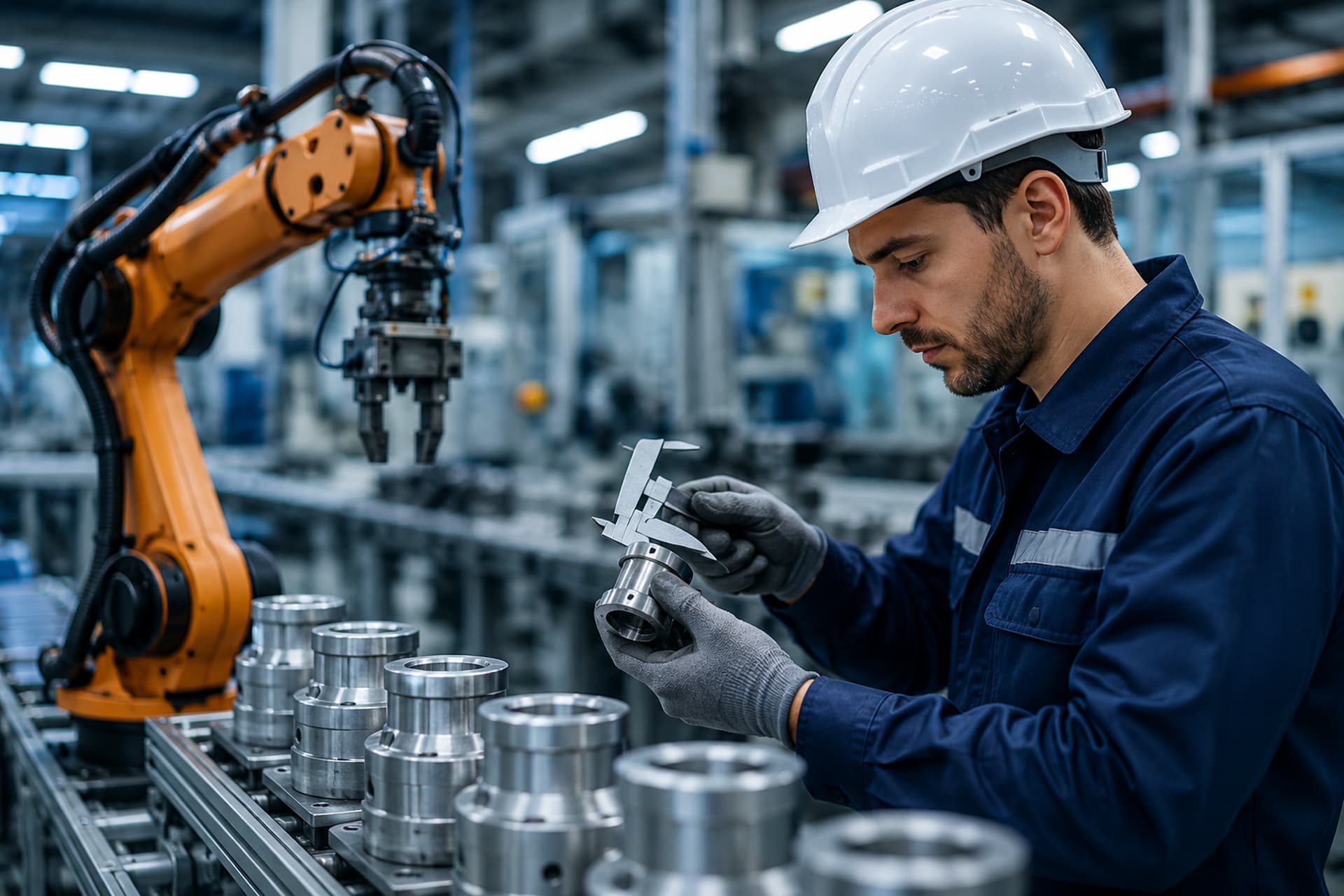
Inspection remains one of the most widely used quality control techniques in manufacturing. These procedures help manufacturers detect defects before products move further through production or reach the customer.
Incoming Material Inspection
Manufacturers often inspect raw materials and components before they enter production. This helps prevent defective materials from creating larger problems later in the manufacturing process.
For example, a machinery manufacturer may inspect metal parts for thickness, strength, or dimensional accuracy before assembly begins.
In-Process Inspection
In-process inspections occur during production rather than after completion. Operators monitor equipment performance, measurements, and product quality at specific checkpoints throughout the workflow.
This approach helps manufacturers identify issues early and avoid large batches of defective products.
Final Product Inspection
Final inspections verify that completed products meet required specifications before shipping. These checks may include:
- Visual inspections
- Functional testing
- Performance verification
- Packaging quality checks
- Safety compliance reviews
Final inspections act as the last layer of protection before products reach customers.
Process Standardisation Creates Reliable Production
One of the most effective ways to improve manufacturing quality is through process standardisation. Standardised procedures reduce variation and ensure employees follow consistent production methods.
Clear production standards often include:
- Step-by-step operating procedures
- Equipment setup guidelines
- Safety protocols
- Product measurement standards
- Maintenance schedules
- Documentation requirements
When production processes remain consistent, manufacturers can reduce human error and improve repeatability across operations.
Standardisation also makes employee training easier because workers follow clearly defined procedures instead of relying on guesswork or informal methods.
Statistical Quality Control Improves Decision-Making
Many manufacturers use statistical quality control (SQC) to monitor production performance and identify process variations before defects occur.
Rather than relying only on visual inspections, statistical methods use production data to evaluate process stability and product consistency.
Common Statistical Quality Control Methods
Control Charts
Control charts track process performance over time. Manufacturers use them to identify unusual variations that may indicate equipment issues or process instability.
Sampling Inspection
Instead of inspecting every product, manufacturers test selected samples from production batches. This saves time while still maintaining quality oversight.
Process Capability Analysis
This method measures whether manufacturing processes can consistently produce products within acceptable quality limits.
Statistical analysis allows manufacturers to make informed decisions based on real production data instead of assumptions.
Continuous Improvement Strengthens Long-Term Performance
Successful manufacturers understand that quality improvement is never fully complete. Continuous improvement helps businesses identify inefficiencies, improve workflows, and adapt to changing production demands over time.
Many manufacturers apply continuous improvement strategies such as:
- Root cause analysis
- Lean manufacturing principles
- Corrective action systems
- Employee feedback programmes
- Performance monitoring
- Workflow optimisation
Small improvements made consistently often create significant operational gains over time.
For example, reducing machine downtime by even a few minutes per shift can increase annual production output while lowering operational costs.
Employee Training Plays a Critical Role
Even advanced manufacturing equipment cannot replace the importance of skilled employees. Well-trained workers are essential for maintaining production quality, identifying problems early, and following proper operating procedures.
Strong manufacturing training programmes typically focus on:
- Equipment operation
- Inspection procedures
- Workplace safety
- Quality standards
- Troubleshooting techniques
- Process documentation
Employees who understand quality expectations are more likely to spot defects, prevent mistakes, and contribute to continuous improvement efforts.
Training also improves consistency across teams and shifts, which helps maintain stable production performance.
Technology Is Transforming Quality Control Systems
Modern manufacturing technology has significantly improved how businesses monitor and maintain production quality.
Advanced quality management systems now allow manufacturers to collect real-time production data, automate inspections, and identify process issues faster than traditional manual methods.
Technologies Supporting Manufacturing Quality Control
Automated Inspection Systems
Cameras, sensors, and machine vision systems can inspect products with high speed and precision.
Industrial Internet of Things (IIoT)
Connected machines collect performance data that helps manufacturers monitor equipment health and production efficiency.
Predictive Maintenance Tools
Predictive systems identify potential equipment failures before breakdowns occur, helping reduce downtime and production defects.
Manufacturing Analytics Software
Data analytics platforms help businesses track production trends, defect rates, and operational performance across facilities.
Technology improves visibility across manufacturing operations and allows faster corrective action when problems arise.
Compliance and Regulatory Standards Matter
Many industries must follow strict manufacturing compliance standards to ensure product safety and quality. Regulatory requirements vary depending on the industry, product type, and market location.
Common compliance areas include:
- Product safety regulations
- Environmental standards
- Industry certifications
- Workplace safety requirements
- Documentation and traceability rules
Manufacturers that maintain strong compliance systems often reduce legal risks while improving operational discipline and customer confidence.
Industries such as aerospace, automotive, pharmaceuticals, and food manufacturing rely heavily on strict quality assurance processes because product failures can create serious safety concerns.
Reducing Waste Through Better Quality Control
Poor quality often leads to wasted materials, higher production costs, and unnecessary rework. Effective quality control helps manufacturers minimise waste throughout the production cycle.
Manufacturers can reduce waste by:
- Identifying defects earlier
- Improving equipment maintenance
- Standardising workflows
- Monitoring process performance
- Training employees effectively
- Using accurate production data
Lower waste levels improve both profitability and sustainability. This is especially important as businesses face growing pressure to improve environmental responsibility while controlling operating costs.
Building a Strong Quality Culture
The most successful manufacturers treat quality as part of company culture rather than just a department responsibility.
When leadership prioritises quality, employees become more engaged in maintaining production standards and solving operational problems proactively.
A strong quality culture usually includes:
- Clear communication
- Accountability across departments
- Continuous learning
- Open problem reporting
- Collaboration between teams
- Long-term improvement goals
Quality becomes more sustainable when every employee understands their role in maintaining production performance.
Frequently Asked Questions (FAQs)
What is quality control in manufacturing?
Quality control in manufacturing is the process of monitoring production to ensure products meet specific quality standards, safety requirements, and customer expectations consistently.
Why is process standardisation important in manufacturing?
Process standardisation improves consistency, reduces human error, and helps manufacturers maintain stable production quality across different teams, shifts, and facilities.
How does statistical quality control help manufacturers?
Statistical quality control uses production data to identify process variations, improve decision-making, and reduce defects before they affect large production batches.
What role does employee training play in quality control?
Employee training helps workers follow proper procedures, identify defects early, operate equipment correctly, and maintain consistent production standards.
How does technology improve manufacturing quality control?
Technology improves quality control through automation, real-time monitoring, predictive maintenance, and data analytics that help manufacturers detect and solve issues faster.
Conclusion
Quality control remains one of the strongest foundations of successful manufacturing operations. It helps businesses maintain product consistency, reduce defects, improve efficiency, and strengthen customer trust over time. From inspection procedures and statistical analysis to employee training and automated technologies, every quality control method contributes to stronger operational performance.
Manufacturers that invest in strong quality systems often experience lower waste, better productivity, and fewer costly disruptions. More importantly, they build long-term reliability that customers and business partners can depend on. As manufacturing continues to evolve through automation, data analytics, and smarter production systems, quality control will remain essential for maintaining competitiveness and sustainable growth.