Modern manufacturing depends on more than fast machines and skilled workers. Without a clear production plan, even well-equipped facilities can face delays, wasted materials, missed deadlines, and rising operational costs. Strong production planning creates structure across the entire manufacturing process. It helps businesses coordinate labour, equipment, inventory, and scheduling so production moves efficiently from start to finish.
As supply chains become more complex and customer expectations continue to rise, manufacturers need planning systems that are flexible, accurate, and responsive. Companies that improve production planning often see better productivity, stronger inventory control, lower downtime, and improved customer satisfaction. Whether managing a small factory or a large-scale production facility, the right planning strategies help operations stay organised, profitable, and competitive.
Why Production Planning Matters in Manufacturing
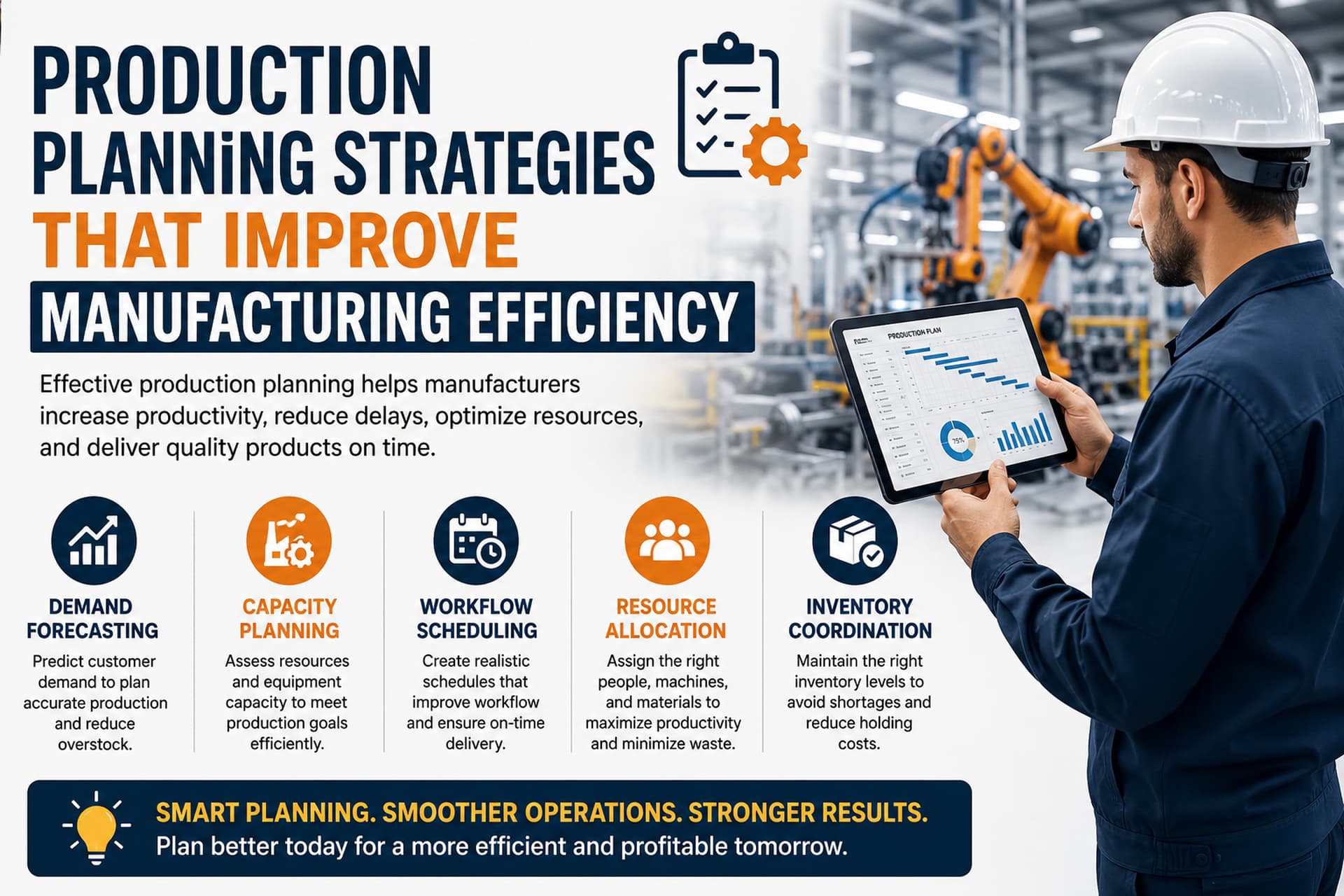
Production planning connects every part of the manufacturing process. It determines what products need to be produced, when production should happen, how resources will be used, and how demand will be met without unnecessary delays or excess costs.
When planning is weak, businesses often experience:
- Production bottlenecks
- Missed delivery deadlines
- Material shortages
- Excess inventory
- Equipment downtime
- Poor workflow coordination
- Increased operational expenses
Effective production planning helps manufacturers avoid these problems by improving visibility and coordination across departments.
Demand Forecasting Improves Planning Accuracy
One of the most important parts of production planning is understanding future demand. Demand forecasting allows manufacturers to estimate future sales based on customer behaviour, seasonal trends, market conditions, and historical production data.
Accurate forecasting helps manufacturers:
- Prepare inventory levels more effectively
- Avoid overproduction
- Reduce storage costs
- Improve purchasing decisions
- Maintain steady production schedules
Manufacturers that use forecasting tools and real-time sales data can respond faster to market changes. This creates a more stable production environment and reduces unnecessary disruptions.
Capacity Planning Helps Prevent Operational Delays
Capacity planning focuses on understanding how much production a facility can realistically handle within a specific timeframe. This includes evaluating labour availability, machine performance, production hours, and equipment limitations.
Without proper capacity planning, manufacturers may overload production lines or underuse resources. Both situations reduce efficiency and increase costs.
Strong capacity planning allows businesses to:
- Balance workloads effectively
- Prevent equipment overuse
- Improve labour scheduling
- Reduce production downtime
- Increase output consistency
When manufacturers align production goals with actual operational capacity, workflows become more predictable and manageable.
Workflow Scheduling Keeps Production Moving
Production scheduling creates a clear timeline for manufacturing activities. It ensures that tasks are completed in the correct order while reducing idle time between production stages.
Well-structured workflow scheduling improves coordination between teams, machines, and departments. It also helps manufacturers identify delays before they become larger operational problems.
Key Benefits of Workflow Scheduling
- Faster production cycles
- Better machine utilisation
- Reduced waiting times
- Improved order tracking
- Higher on-time delivery rates
- More organised factory operations
Modern scheduling software also allows manufacturers to adjust production schedules quickly when customer demands change or supply chain disruptions occur.
Resource Allocation Improves Operational Efficiency
Manufacturing efficiency depends heavily on how resources are distributed across production processes. Resource allocation involves assigning labour, equipment, materials, and production space where they are needed most.
Poor resource allocation often leads to production slowdowns, wasted labour hours, and equipment bottlenecks.
Effective allocation strategies help manufacturers:
- Reduce idle equipment time
- Improve workforce productivity
- Lower operational waste
- Optimise machine performance
- Increase production consistency
Businesses that monitor resource usage closely can identify inefficiencies early and make adjustments before they affect output.
Inventory Coordination Reduces Waste and Shortages
Inventory coordination plays a major role in production planning. Manufacturers need enough raw materials to meet production targets without carrying excessive stock that increases storage costs.
Poor inventory coordination can create serious operational problems. Too little inventory causes production delays, while too much inventory ties up cash flow and warehouse space.
Smart Inventory Coordination Strategies
- Use real-time inventory tracking systems
- Monitor supplier lead times carefully
- Maintain safety stock for critical materials
- Improve communication between purchasing and production teams
- Review inventory performance regularly
Efficient inventory management supports smoother production scheduling and reduces disruptions across the supply chain.
Real-Time Data Improves Manufacturing Decisions
Modern manufacturers increasingly rely on real-time data to improve production planning accuracy. Digital monitoring systems provide instant visibility into machine performance, inventory levels, production progress, and operational delays.
Real-time production data helps businesses:
- Detect bottlenecks faster
- Reduce downtime
- Improve scheduling decisions
- Monitor production efficiency
- Increase operational transparency
Access to accurate production information allows managers to respond quickly when unexpected problems occur.
Automation Supports Better Production Planning
Automation has become an essential part of modern manufacturing operations. Automated systems help manufacturers streamline repetitive planning tasks while improving consistency and accuracy.
Automation can support:
- Production scheduling
- Inventory monitoring
- Demand forecasting
- Equipment maintenance tracking
- Workflow coordination
- Quality control processes
By reducing manual planning errors, manufacturers can improve operational stability and increase productivity over time.
Cross-Department Communication Strengthens Coordination
Production planning works best when departments communicate effectively. Manufacturing, procurement, logistics, warehouse management, and sales teams all need access to the same operational information.
Poor communication often creates delays, inaccurate forecasting, and scheduling conflicts.
Strong coordination improves:
- Production accuracy
- Inventory management
- Delivery timelines
- Supply chain efficiency
- Customer satisfaction
Regular planning meetings and shared digital systems help teams stay aligned throughout the production cycle.
Reducing Bottlenecks Improves Productivity
Operational bottlenecks slow production and reduce manufacturing efficiency. Bottlenecks often occur when one production stage cannot keep up with the rest of the workflow.
Common causes include:
- Equipment limitations
- Labour shortages
- Material delays
- Poor scheduling
- Maintenance issues
Manufacturers that monitor workflow performance consistently can identify bottlenecks earlier and make adjustments before production is affected.
Practical Ways to Reduce Bottlenecks
- Upgrade outdated equipment
- Improve preventive maintenance
- Balance production workloads
- Train employees across multiple tasks
- Use workflow analytics to track delays
Small operational improvements often create significant long-term productivity gains.
Data Analytics Supports Continuous Improvement
Production planning should never remain static. Successful manufacturers regularly review operational performance and identify areas for improvement.
Data analytics helps businesses measure:
- Production output
- Equipment efficiency
- Downtime frequency
- Order completion rates
- Inventory turnover
- Labour productivity
These insights allow manufacturers to make smarter planning decisions and improve long-term operational performance.
Flexible Production Planning Supports Business Growth
Manufacturing environments change constantly. Customer demand shifts, supplier delays happen, and market conditions evolve quickly. Flexible production planning helps manufacturers adapt without disrupting operations.
Flexible planning systems allow businesses to:
- Adjust schedules quickly
- Scale production efficiently
- Respond to market demand changes
- Manage supply chain disruptions
- Improve long-term operational resilience
Manufacturers that build flexibility into their planning strategies are often better prepared for future growth and uncertainty.
The Role of Technology in Modern Production Planning
Digital manufacturing technology continues to transform production planning across industries. Many manufacturers now use integrated software systems that connect forecasting, scheduling, inventory management, and workflow monitoring into a single platform.
Common Technologies Supporting Production Planning
- Enterprise Resource Planning (ERP) systems
- Manufacturing Execution Systems (MES)
- Industrial Internet of Things (IIoT)
- Predictive analytics tools
- Cloud-based production software
- Automated reporting dashboards
These technologies improve visibility, reduce manual errors, and support faster operational decision-making.
Helpful Questions
What is production planning in manufacturing?
Production planning is the process of organising manufacturing activities, resources, schedules, and inventory to ensure products are produced efficiently, on time, and at the right cost while meeting customer demand.
Why is production planning important for manufacturing efficiency?
Production planning improves workflow coordination, reduces delays, controls inventory, minimises waste, and helps manufacturers use labour, equipment, and materials more effectively across the production process.
How does demand forecasting improve production planning?
Demand forecasting helps manufacturers predict customer needs using sales data and market trends, allowing businesses to plan inventory, schedules, staffing, and production capacity more accurately.
What technologies support modern production planning?
Modern production planning often uses ERP systems, automation software, real-time monitoring tools, predictive analytics, and manufacturing execution systems to improve scheduling, inventory control, and operational visibility.
How can manufacturers reduce production bottlenecks?
Manufacturers can reduce bottlenecks by improving scheduling, upgrading equipment, monitoring workflows, maintaining machines regularly, balancing workloads, and using real-time production data to identify delays quickly.
Overall Summary
Effective production planning is one of the most important foundations of manufacturing efficiency. It helps businesses coordinate resources, improve scheduling, reduce waste, and maintain consistent production performance. Strong planning systems also create better communication across departments while improving responsiveness to changing customer demands and market conditions.
Manufacturers that invest in forecasting, workflow management, inventory coordination, automation, and real-time monitoring are better positioned to improve productivity and reduce operational disruptions. Over time, even small improvements in planning accuracy can create major gains in profitability, operational stability, and customer satisfaction.
As manufacturing continues to evolve, production planning will remain a critical strategy for companies that want to stay competitive, scalable, and efficient in a fast-changing industrial environment.